
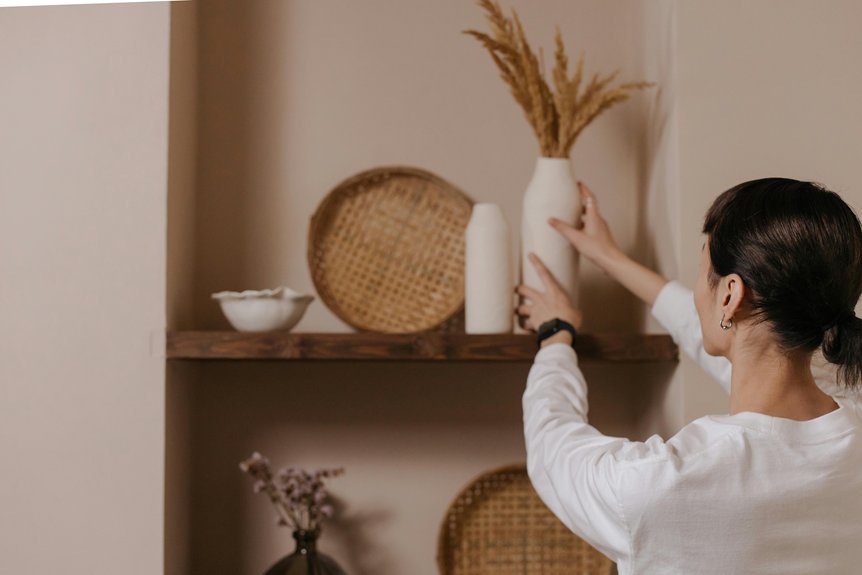
Modern farmhouse nails the cozy-meets-clean vibe by mixing rustic wood with sleek lines. Start with fresh white walls and light wood floors as your canvas. Layer in neutral textiles like linen and cotton, then add black or brass hardware for polish. Thrift sturdy pieces—dressers, benches—and paint them to match your palette. Balance textures with woven rugs and ceramic planters. Keep your gallery wall curated, not cluttered. Stick with these fundamentals, and you’ll find the specific tricks that suit any room.
Choose Your Modern Farmhouse Style: American, European, or Coastal
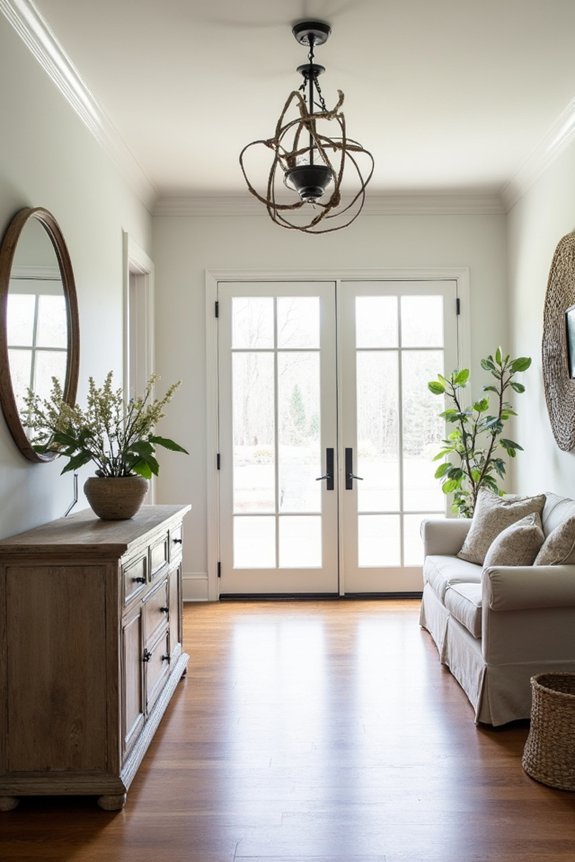
So, which modern farmhouse style actually speaks to you? I’ll break down three distinct vibes that’ll help you figure out your decor direction.
American modern farmhouse delivers bold, traditional warmth with reclaimed wood and matte metals. Your walls become showcases for this sturdy aesthetic. European modern farmhouse opts for streamlined elegance—lighter woods, restrained decor, and that calm cabin feel. It’s minimalism with coziness. Coastal modern farmhouse embraces airy brightness with sea-inspired blues and whites, white-washed woods, and breezy textures that evoke beaches.
Each style shares core elements: warm wood tones, subtle brass accents, and pared-down updated touches. The real difference? Your desired feeling. Want bold warmth? Choose American. Prefer muted elegance? Go European. Craving coastal brightness? Coastal’s your match. Your home’s personality hinges on this choice.
Build a Modern Farmhouse Foundation: Paint, Flooring, Textiles
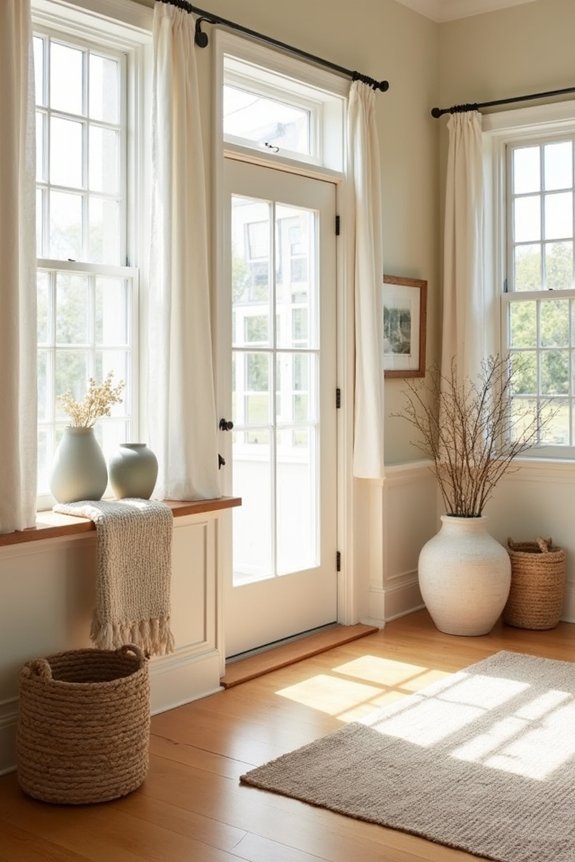
The foundation of any modern farmhouse starts with what you see first—your walls, floors, and the fabrics that tie it all together. I’ve learned that fresh white walls create the perfect canvas for everything else. Pair them with light-stained or painted wood floors, and suddenly your space feels bright and considered.
For textiles, I go neutral—linen and cotton in creams, beiges, and soft grays work beautifully. These fabrics feel welcoming without demanding attention. Then I add personality through rugs with earthy tones and minimalist patterns that ground the room.
Here’s what works: black or brass hardware gives your modern farmhouse subtle contrast and polish. These small touches improve the entire aesthetic without overwhelming your rustic foundation. You’re building a space that feels both calm and sophisticated—exactly where you want to belong.
Select Rustic Furniture With Clean Lines
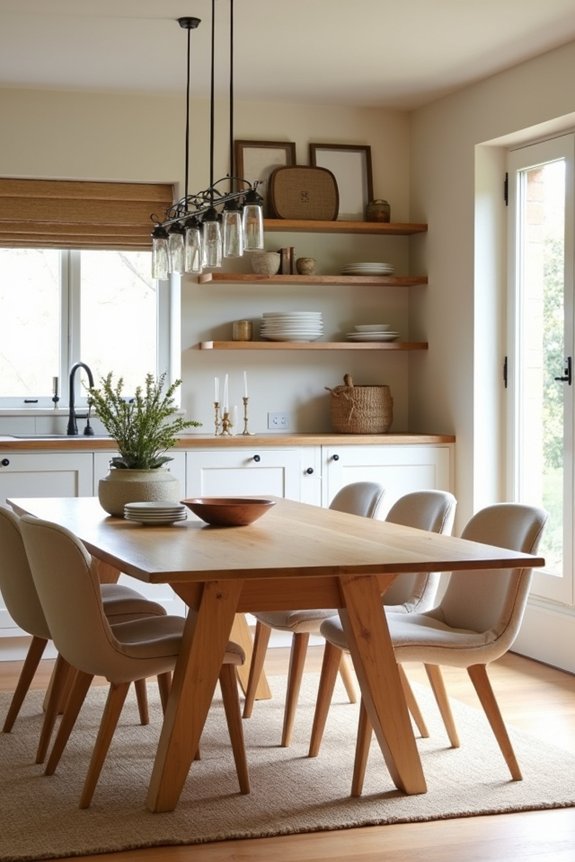
When I’m picking out furniture for my modern farmhouse space, I’m learning that balancing traditional rustic vibes with sleek, contemporary lines works well—think a sturdy wooden table with tapered legs instead of chunky carved details. Mixing materials like reclaimed wood with leather accents or matte black hardware prevents pieces from feeling too heavy or dated, and proportions matter significantly; oversized pieces can overwhelm a room, so I’m selecting furniture with clean silhouettes that leaves breathing room in the space.
Balance Traditional And Modern
How do you keep a farmhouse room from feeling stuck in the 1800s? You blend the best of both worlds by mixing traditional pieces with modern touches. This balance prevents farmhouse decor from feeling dated or cluttered.
- Pair a classic wood dining table with streamlined chairs featuring metal legs
- Combine distressed cabinetry with sleek hardware and clean-lined countertops
- Layer warm wood tones with modern contrast through black accents and brass fixtures
- Mix reclaimed wood shelving with minimalist decorative pieces and neutral textiles
The trick is restraint. Don’t overload spaces with rustic elements. Instead, let traditional pieces breathe alongside contemporary silhouettes. This creates the modern farmhouse feel—warm, inviting, and current. You’ll appreciate a design approach that values authenticity while maintaining style.
Material Mix And Texture
Since rustic pieces can easily tip into “grandma’s attic” territory, you’ll want to be deliberate about what you bring into your space. I’ve learned this the hard way—not every weathered frame belongs on your wall.
Start by selecting natural materials like reclaimed wood and matte metals. These create your foundation without feeling heavy or dated. Layer in texture through woven jute rugs, leather accents, and textured ceramic planters. This approach adds visual interest while keeping things feeling open and modern.
The trick? Choose furniture with clean lines. A streamlined wood dining table or minimal banquette grounds your room. Pair these pieces with neutral backgrounds, then highlight contrast using raw wood tones against brass or black metal hardware. You’re building a cohesive story—one that feels warm yet contemporary.
Furniture Proportions And Scale
What separates a well-designed farmhouse room from one that feels cluttered? Proportion. I’ve learned that choosing modern pieces with the right scale keeps your space from feeling cramped and unwelcoming.
Here’s what I focus on:
- Select furniture that has room around it—leave negative space around each piece so your room doesn’t feel suffocating
- Match scale to room size—a spacious couch works better than three bulky chairs in tight quarters
- Choose clean-lined rustic pieces—traditional wood tables with contemporary detailing balance farmhouse warmth well
- Prioritize multifunctional items—storage benches and open shelving provide utility without overwhelming your layout
I’ve ditched the misconception that more furniture equals more comfort. Instead, I invest in one bold accent piece paired with streamlined essentials. This approach creates that modern farmhouse feel where you’re not tripping over legs or searching for floor space.
Layer Textures: Pots, Planters, and Woven Materials
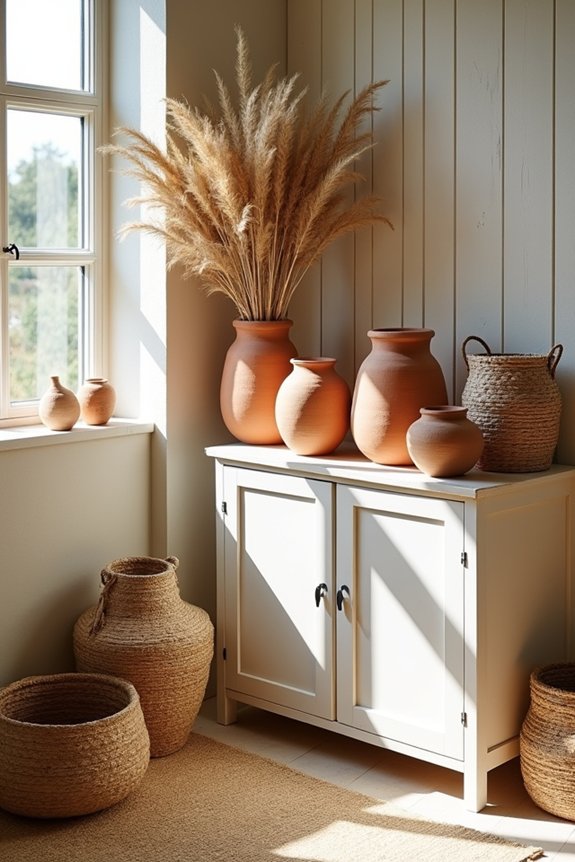
Why do some farmhouse rooms feel alive while others fall flat? The answer lies in layering textures through thoughtfully chosen pots, planters, and woven materials.
I mix chunky knit textiles with smooth ceramics and natural materials like jute and rattan. This combination creates depth without overwhelming the space. I keep my color palette restrained—whites, blacks, and warm terracotta—so everything connects visually.
Here’s what works: vary your container heights and styles. Placing towering ceramic pots alongside low-profile woven baskets creates an organic, lived-in arrangement. Add matte black or brass hardware to balance rugged and refined elements with warm wood tones.
The result? A space that feels both considered and welcoming—exactly what modern farmhouse design should achieve.
Balance With Black and Brass Accents
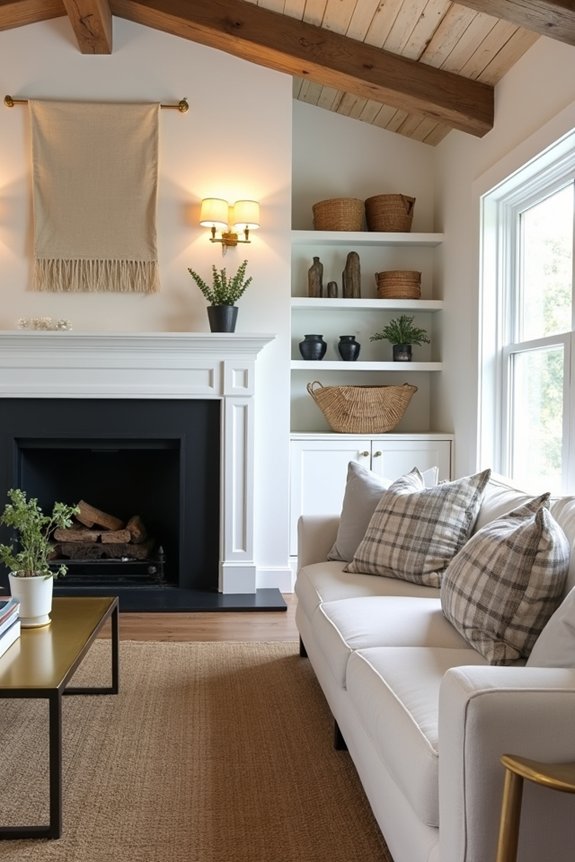
Now that you’ve got your textures layered just right, it’s time to add the elements that’ll keep your farmhouse from looking like you raided an actual barn. Black accents and brass elements work as sophisticated counterbalances for contemporary style. They prevent that overly rustic vibe while adding depth.
Here’s how to approach it:
- Black lighting fixtures – A statement chandelier or pendant creates focal points
- Brass hardware – Cabinet pulls and door handles warm up neutral spaces
- Black-framed artwork – Adds contrast against neutral walls without overwhelming
- Balanced distribution – One brass piece, scattered black accents, avoiding visual clutter
The key? Restraint. You’re not decorating with every black and brass item you find. Instead, strategically place these metals to enhance your wood tones and leather pieces. This measured approach keeps everything feeling purposeful and modern.
Pick Modern Pendant Lighting: Milk Glass and Minimalist Options
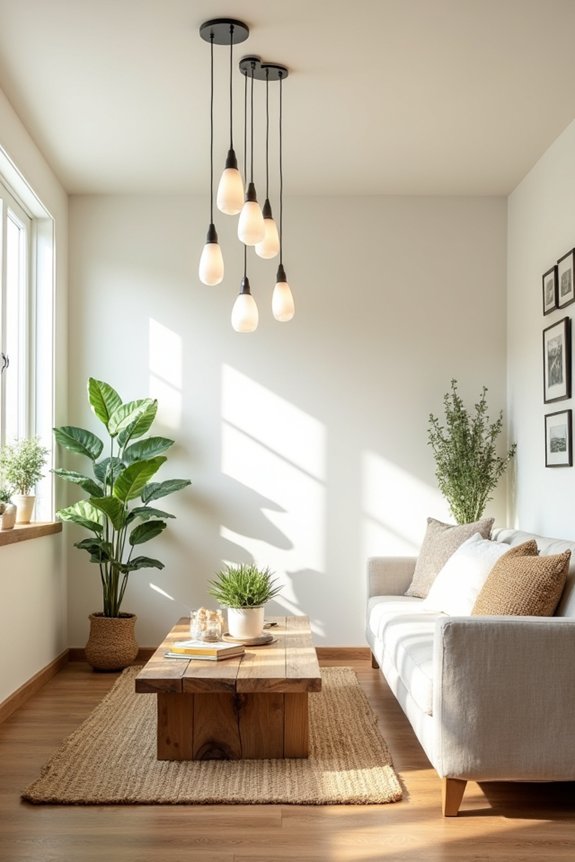
Milk glass pendant lighting delivers that clean, retro-inspired glow for a modern farmhouse aesthetic. These fixtures pair well with neutral walls and warm wood tones.
Choose pendants with uncluttered silhouettes and clean lines to maintain a minimal style. Brass or black metal accents add warmth and contrast, keeping the space from feeling too sterile. Adjustable cords let you customize heights based on your needs.
For impact, install a single oversized milk glass pendant as a focal point. Alternatively, hang three pendants above your kitchen island to define the space. Both approaches work effectively for this style.
Refresh Your Walls: Shiplap Vs. Paneling for Historic Homes
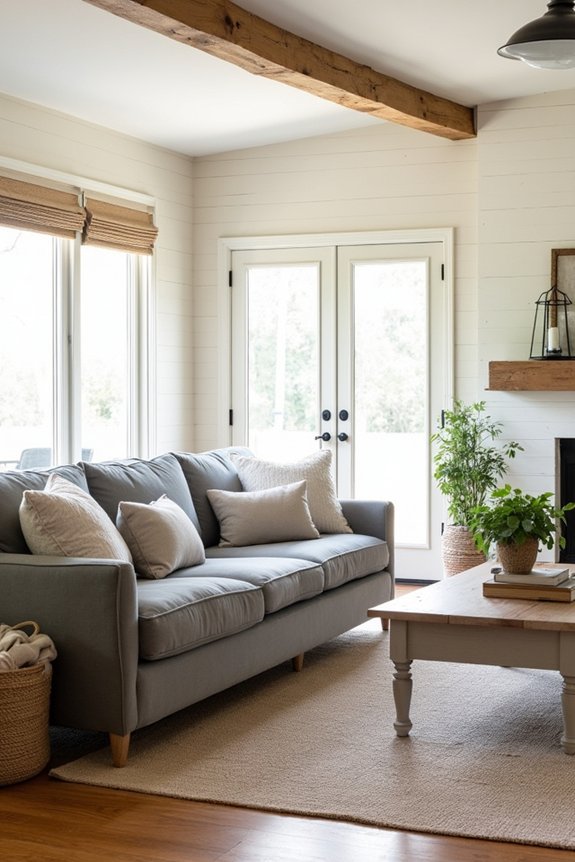
Once you’ve nailed down your lighting, it’s time to tackle what’s probably the biggest visual statement in your space—your walls.
Choosing between shiplap and paneling depends on the vibe you’re going for. Shiplap gives you that casual, cottage-like feel with its horizontal boards and subtle grooves. Paneling, meanwhile, reads more formal and architectural. Both work beautifully in historic homes when paired with fresh white paint.
Here’s what I consider when deciding:
- Shiplap emphasizes width and light, perfect for smaller spaces
- Paneling works strategically around mantels or as accent walls
- White paint keeps either option bright and modern
- Wood tones maintain the home’s original character
Either choice lets original details remain visible while giving your home that farmhouse refresh you’re after.
Find and Frame Vintage Artwork the Modern Way
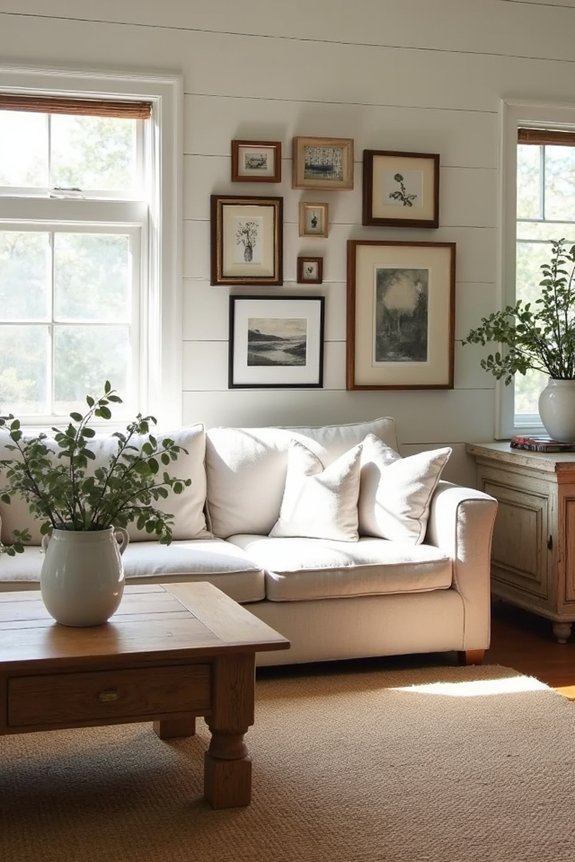
What’s the key to pulling off vintage art in a modern farmhouse without making your walls look like a dusty antique shop? Choose minimalist frames that won’t compete with your clean surroundings. I’ve learned that pairing antique pieces with light wood or white backdrops keeps everything feeling fresh, not heavy.
Skip traditional wall hanging—try placing artwork on floors or consoles instead. It’s an effective approach for creating that gallery-like vibe. Mix your vintage artwork with contemporary accents like leather-wrapped frames or brass hardware. This blend bridges rustic warmth and modern polish well.
Your modern farmhouse gallery should feel deliberate, not cluttered. Reference your style guide to ensure each piece complements your overall design. When done right, vintage finds become solid anchors that enhance your entire space.
Source Smart: New Pieces Vs. Thrifted Finds
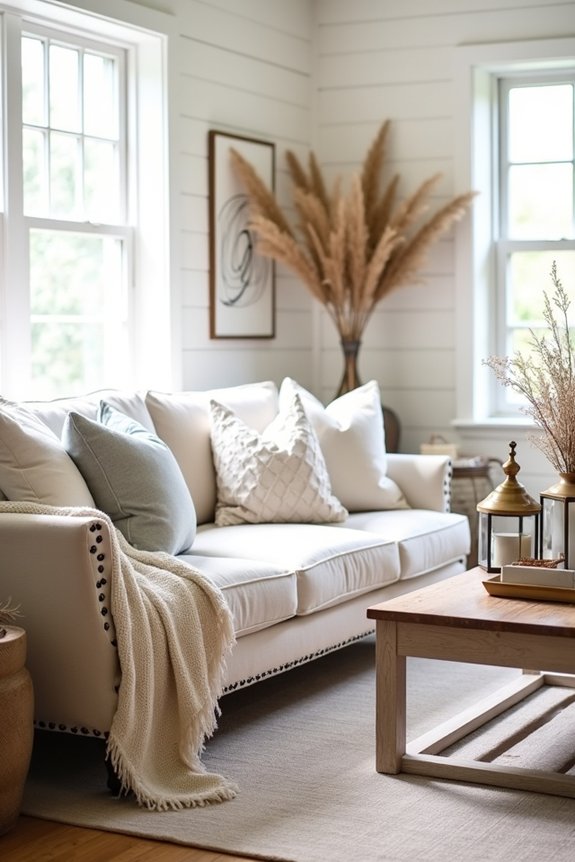
When I started decorating my modern farmhouse, I quickly realized that blending thrifted finds with new pieces wasn’t just a budget hack—it was actually key to avoiding that “stuck in the past” vibe.
Here’s what I’ve learned works:
- Prioritize solid structures – I hunt for dressers and benches that’ll become consoles and storage seating
- Paint thrifted treasures – Chalk paint makes vintage finds fit my neutral, warm-wood palette instantly
- Invest in timeless essentials – I splurge on quality coffee tables and open shelving that’ll last
- Mix materials strategically – Reclaimed wood and matte metals tie everything together
The trick? Use thrifted pieces as your foundation, then add a few high-impact new items. That balance keeps things feeling current and polished while honoring that authentic farmhouse charm we’re all after.