
Bathroom doors aren’t actually smaller by design—they’re typically the same 30 to 34-inch width as other interior doors. However, plumbing constraints and tight layouts often force homeowners to install narrower options that don’t meet modern accessibility guidelines. The real issue isn’t the door itself but the clear opening space you need. A 32-inch door width gives you proper clearance for wheelchairs and walkers, though plumbing placement might require creative solutions like pocket or sliding doors. There’s more to consider about sizing yours correctly.
Are Bathroom Doors Smaller Than Standard Doors?
Ever notice how your bathroom door feels snugger than the ones leading into your bedroom or living room?
Bathroom doors aren’t universally smaller. Standard door width typically ranges from 30 to 34 inches, matching most interior doors. What makes bathrooms feel cramped is space constraints. We’re working with limited square footage, so designers often choose narrower options to maximize usable room inside.
Bathroom doors aren’t universally smaller—limited square footage drives designers to choose narrower options maximizing usable interior space.
The clear opening—that’s the actual walkway space—matters most. NKBA guidelines recommend at least 32 inches for accessibility. If you’re planning renovations or dealing with tight quarters, you’ve got options: standard doors, pocket doors, or sliding variants.
The real difference isn’t that bathroom doors must be smaller. It’s that we strategically size them based on available space and accessibility needs. Your bathroom setup depends entirely on what works for you.
Standard Interior Doors vs. Bathroom Doors: Key Differences
So we’ve established that bathroom doors aren’t inherently smaller—they’re just chosen strategically. Here’s where they differ from standard interior doors:
- Width specifications: Standard interior doors run 24–36 inches, while bathroom door width typically ranges 30–34 inches for compact spaces
- Clear opening requirements: Accessibility guidelines demand a minimum 32-inch clear opening, often requiring 34-inch door widths to comply
- Door swing considerations: Bathrooms frequently use pocket or sliding doors instead of traditional door swing styles to maximize usable space
- Space-saving solutions: Older bathrooms sometimes use 24–28-inch doors when square footage is limited
The real difference? Bathroom doors are chosen based on practicality rather than inherent size limitations. Standard interior doors offer flexibility, but bathrooms demand efficiency. Understanding these distinctions helps you make informed choices when renovating or building.
Common Bathroom Door Widths and When Each Works
What width should you actually choose for your bathroom door? It depends on your space and who’s using it. Here are the options to help you pick what works for your home.
| Door Width | Best For | Clear Opening | Notes |
|---|---|---|---|
| 24 inches | Tiny bathrooms | 20 inches | Tight squeeze; not ideal |
| 30 inches | Standard homes | 26 inches | Common, functional |
| 32 inches | Most bathrooms | 28 inches | NKBA guidelines recommend this |
| 34 inches | Better accessibility | 30 inches | Wheelchairs, walkers fit easier |
| 36 inches | Full accessibility | 32 inches | Most inclusive option |
Standard door widths range from 24 to 36 inches. If you’re tight on space, pocket doors or sliding doors maximize your bathroom door’s usable clearance without sacrificing the actual opening. They work well for accessibility and space constraints.
How Plumbing and Layout Constraints Force Smaller Doors?
Why do so many bathroom doors seem cramped compared to the rest of your house? The answer lies beneath your walls. Plumbing constraints force designers to shrink door widths where pipes run:
- Water supply lines and drain pipes occupy wall space, limiting door frame placement
- Toilet positioning requires specific clearance around fixtures, reducing available wall width
- Sink plumbing underneath vanities eliminates space for standard-sized swinging doors
- Vent stacks and horizontal runs necessitate creative solutions like pocket or sliding doors
A 24-inch door width becomes practical when plumbing layouts tighten. Pocket doors and sliding doors conserve floor space while sidestepping pipes entirely. Your bathroom’s cramped entry isn’t poor design—it’s smart engineering balancing fixture placement with functional door width. This reflects how builders make deliberate compromises between plumbing requirements and usable doorway dimensions.
Bathroom Door Accessibility Standards: When to Size Up
When you’re dealing with bathroom doors, here’s the thing: accessibility standards exist for good reasons, and they might just convince you to size up from that cramped 24-inch opening. The ADA requires a minimum 32-inch clear opening, which means your actual door width needs to be around 36 inches. NKBA guidance backs this up, recommending at least 34 inches wide for that 32-inch clear opening. I know what you’re thinking—that’s bigger than standard bathroom doors. But here’s why it matters: accessibility isn’t just for wheelchair users; it helps anyone maneuvering with luggage, laundry baskets, or mobility aids. If conventional doors won’t cut it in your space, consider sliding or pocket doors. They’re practical solutions for accessibility without sacrificing square footage.
Pocket and Sliding Doors: Space-Saving Options That Work
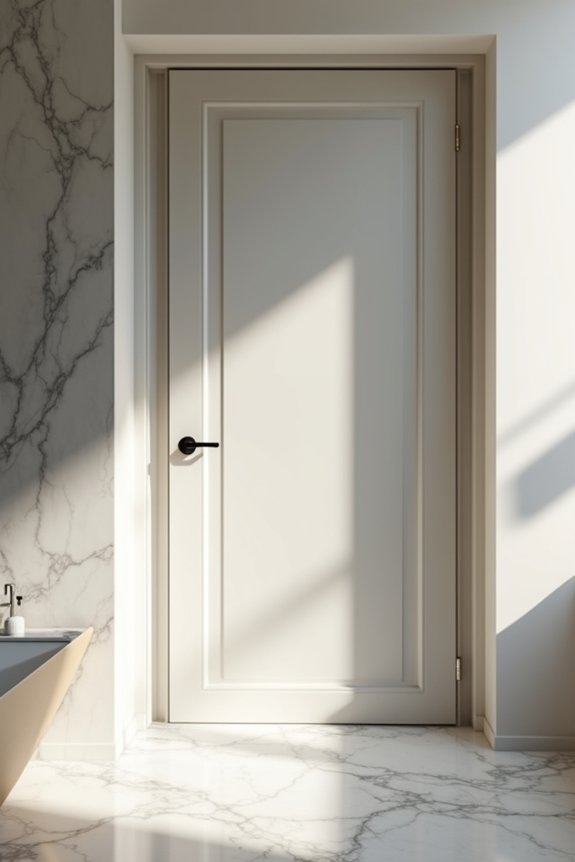
If you’re working with a bathroom that’s tighter than a shoebox, pocket and sliding doors might be your best friends. I’ve found these space-saving solutions work well in cramped layouts.
Here’s why they work so well:
- Eliminate swing clearance – No need for door swing space, freeing up precious square footage
- Achieve 32-inch clear openings – Pocket doors maximize usable width without oversizing the frame
- Offer modern aesthetics – Barn-style sliding doors deliver contemporary appeal while functioning well
- Require solid construction – Solid core or panel interior doors provide smooth, reliable operation on tracks
I’ll be honest: pocket doors and sliding doors aren’t just practical. They’re clever bathroom design moves. When you’re maximizing every inch, these options deliver accessibility and functionality without compromise. Your tight bathroom layout becomes more purposeful rather than cramped.
Bathroom Door Building Codes and Clearance Rules
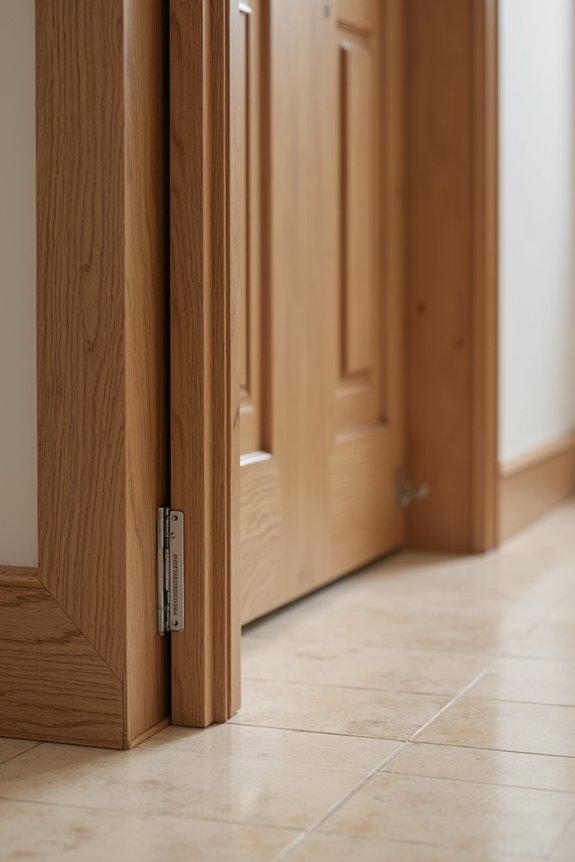
the IRC doesn’t specify exact door widths, leaving bathroom door size decisions to local code officials. You’ll navigate this by checking your municipality’s specific code interpretation. Beyond door widths, you’ll need at least 21 inches of floor space in front of toilets and sinks for usable access. Older homes sometimes sport 24–28 inch doors, which technically don’t meet modern standards. Understanding these clearance rules helps your bathroom renovation meet both safety and accessibility requirements.
Choose the Right Door Size for Your Space
Now that you understand the codes, let’s figure out what actually works in your bathroom.
Choosing the right door size means balancing code requirements with your actual space. Here’s what to consider:
- Measure your available space – Know what you’re working with before shopping
- Prioritize the clear opening – You need at least 32 inches, which means a 34-inch standard bathroom door minimum
- Think about accessibility – A 36-inch door width accommodates wheelchairs and walkers comfortably
- Explore space-saving options – Pocket or sliding doors eliminate swing clearance entirely
Tight quarters? Some folks use 24-inch doors, though they’re cramped. I’d personally avoid that option. Space-saving solutions like pocket or sliding doors let you reclaim valuable square footage while maintaining your clear opening requirements. Your bathroom will function better as a result.