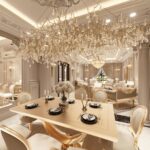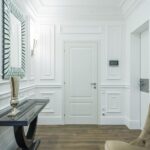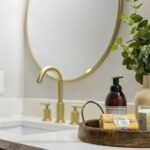
Pick one style as your main character—modern or traditional—so your room doesn’t turn into a visual argument. Then find pieces that share DNA: matching colors like deep blues or warm woods, similar textures, and complementary metals like brass. Use these shared elements as bridges connecting both aesthetics. Balance scales strategically; don’t let a massive modern sofa crush delicate vintage chairs. Introduce pieces gradually over months to maintain breathing room. The layers work together when you understand how each element relates to the others.
Decide Which Style Should Lead When Mixing Modern and Traditional
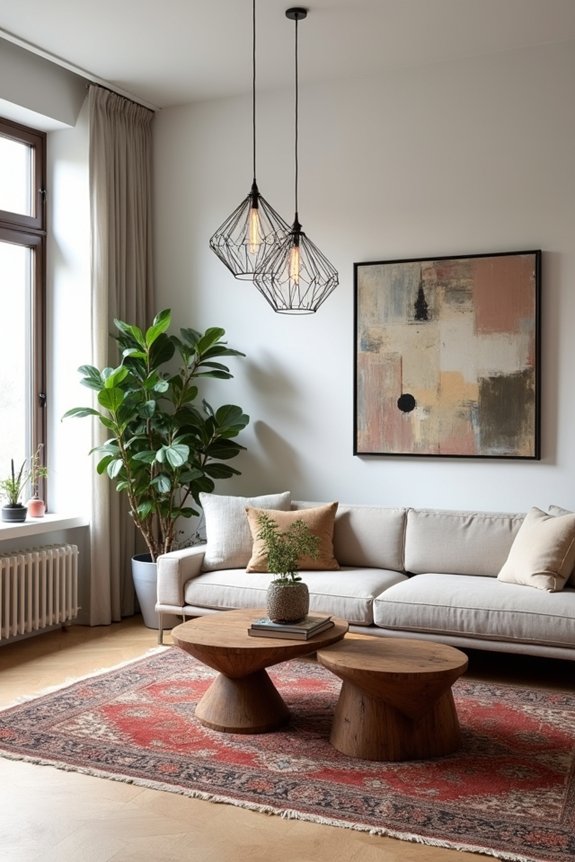
When you’re staring at your living room wondering whether that sleek mid-century sofa will actually vibe with your grandmother’s antique sideboard, here’s the truth: one style’s got to be the main character. I’ve learned this the hard way—mixing modern and traditional without a clear leader creates visual chaos nobody wants to live in.
Look at your space’s strongest architectural features. Does it scream modern with clean lines and minimalist bones? Or does it whisper traditional through crown molding and hardwood? Let that guide your decision. I recommend picking whichever style dominates your room naturally, then using a few accent pieces from the other style to add personality without overwhelming the space.
Pick a Color Palette That Works for Both Styles
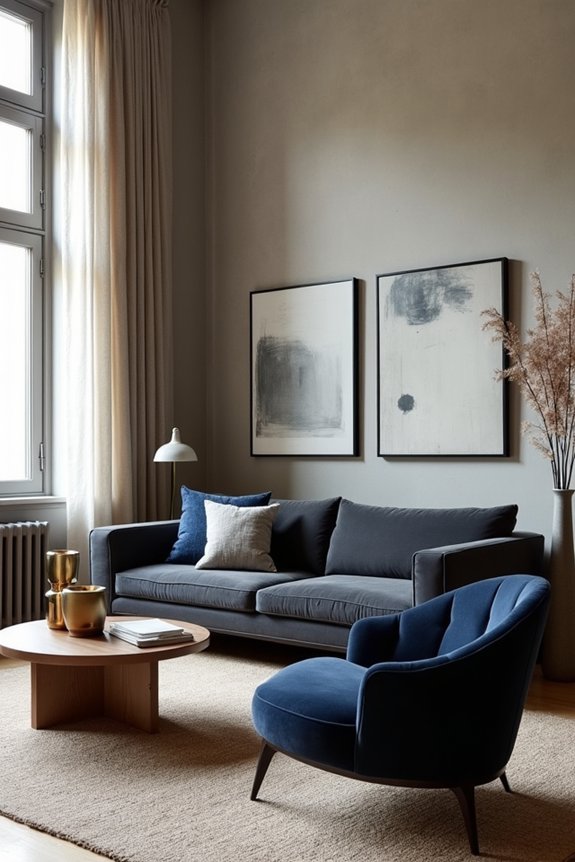
How do you stop a modern sectional and a Victorian wingback from looking like they’re feuding in the same room? The answer lies in your color palette. Start by choosing unifying colors—think blues, greens, mauves, and ochres—that bridge both styles naturally. This cohesion prevents your space from feeling like a decorating accident.
Then use color blocking strategically. Painting walls neutral lets vintage and contemporary pieces work together rather than compete. Coordinate upholstery, rugs, and curtains carefully, ensuring patterns and solids don’t clash. Brass, wood, black, and white act as anchors throughout.
The real trick? Ground everything in one dominant style first, then introduce secondary pieces in the same color family. This approach makes eclecticism feel deliberate and planned.
Choose Your Design Bridge: 4 Elements That Connect Both Aesthetics
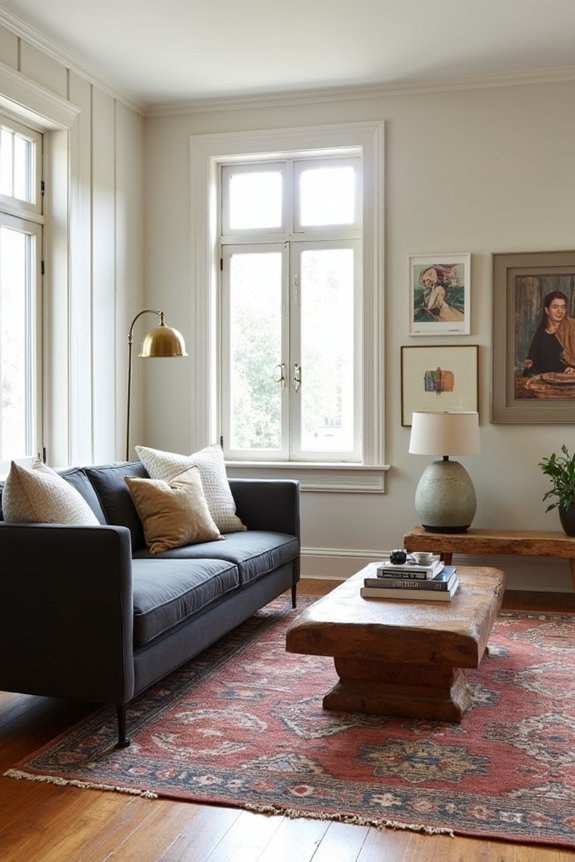
What’s the secret to making a room look deliberate rather than like you raided two completely different estate sales? You need a design bridge—a connecting element that brings your two styles together.
Think of bridges as the glue holding everything in place. I’ve found these four elements work well:
Design bridges are the glue holding eclectic rooms together, creating intentional style rather than chaos.
- Furniture pieces that blend both aesthetics, like a modern sofa paired with traditional legs
- Lighter finishes such as white walls that soften ornate traditional details with clean, contemporary vibes
- Color coordination using complementary palettes—blues, greens, brass, or wood tones—that tie diverse pieces together
The payoff comes when you align multiple bridges with your chosen color mood. This gradual approach creates a room that reads as intentional rather than chaotic. You’re not just mixing styles; you’re creating conversation between them.
Find Modern and Traditional Pieces That Share Visual DNA
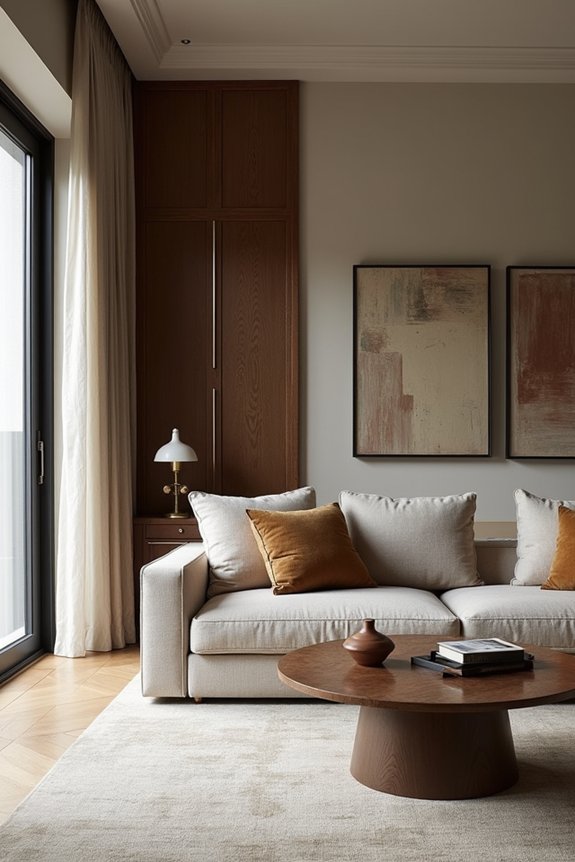
The approach to mixing styles successfully isn’t reinventing the wheel—it’s spotting what your modern and traditional pieces already have in common, whether that’s a shared color palette of deep blues and warm woods or similar textures like linen and leather. Matching these visual elements across your room creates invisible threads that tie everything together, making even wildly different eras work harmoniously rather than chaotically. Pay attention to both the lines and surfaces of your pieces: a sleek modern sideboard and a traditional credenza might both feature straight edges and natural wood tones, which means they’ll actually work as teammates instead of competitors.
Identify Common Visual Elements
Look for these connecting points:
- Wood tones and metallics: Brass accents and warm wood appear in both styles, creating harmony
- Geometric patterns: Repeating shapes in rugs, pillows, or artwork link contemporary and classic pieces
- Neutral color bases: Creams, grays, and blacks ground both aesthetics together
When you spot these shared characteristics, you’re building a cohesive palette. Focus on bridging items too—like a traditional chair in modern fabric—that naturally blend both worlds. Once you train your eye to spot these connections, mixing becomes straightforward. You’ll feel confident combining that vintage mirror with your sleek credenza.
Match Color Palettes Across Styles
Once you’ve identified those shared visual elements, it’s time to get specific about color—because here is the thing: a traditional wingback chair and a sleek modern sofa can absolutely coexist, but only if they’re speaking the same color language.
I build my color palette around a core set of hues: blues, greens, mauves, ochre, wood tones, brass, black, and white. This consistency creates cohesion across disparate pieces. When I’m shopping, I ask myself: does this fit my palette? If not, I pass.
| Style | Color | Texture | Function |
|---|---|---|---|
| Traditional | Muted blue | Velvet | Sofa |
| Modern | Steel blue | Linen | Accent chair |
| Vintage | Dusty mauve | Wool | Area rug |
| Modern | Brass | Metal | Lighting |
| Traditional | Ochre | Wood | Side table |
Paint, rugs, and textiles anchor rooms while preventing visual chaos. Your space becomes deliberate rather than random.
Balance Texture And Line Work
After you’ve nailed your color story, it’s time to look deeper—at the actual shapes and surfaces of your furniture. I’ve discovered that finding pieces sharing visual DNA—similar line work or textures—creates cohesion without feeling forced.
Here’s my approach:
- Echo curved lines across styles by pairing a modern chair’s subtle back curve with a traditionally tufted sofa
- Contrast tactile surfaces deliberately: rough-waxed wood against sleek lacquer or metal creates visual interest while maintaining harmony
- Choose anchor pieces that blend both worlds, like a modern coffee table supporting traditional upholstered seating
The work pays off when you stop fighting the differences and lean into them. Your modern geometric shelving and traditional ornate mirror aren’t enemies—they’re conversation partners. Balance texture with intention, and suddenly your mismatched pieces feel purposefully designed rather than accidentally collected.
Mix Textures, Shapes, and Scales to Balance Vintage and Modern
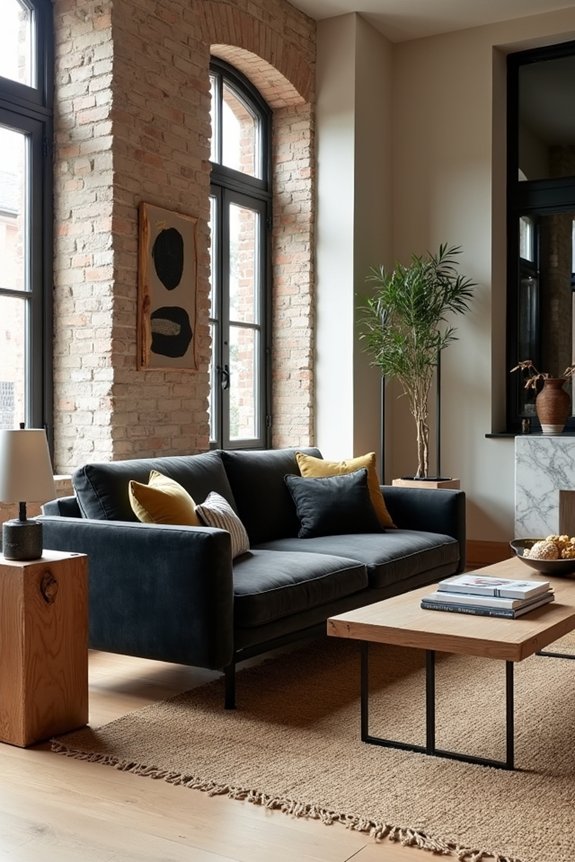
The real magic happens when you deliberately play with contrasts—I’ve found that pairing a sleek modern sofa with a curved vintage chair or mixing glass and steel surfaces against distressed wood creates visual interest. Scale matters too; if you’ve got a chunky antique dresser, balance it with lighter contemporary pieces so your room doesn’t feel weighed down. Think of it like seasoning: a little variation in texture, shape, and size keeps things from feeling monotonous, but too much and you’ve got chaos.
Contrast Straight Lines With Curves
How do you make a sleek modern sofa work next to your grandmother’s ornate wingback chair? The answer lies in deliberately contrasting straight lines with curves.
Pairing angular and curved pieces creates visual interest that feels deliberate. Here’s what works:
- Place a low, geometric coffee table beside a curvaceous vintage cabinet to disrupt uniformity
- Mix smooth leather or metal modern elements against plush upholstery and carved wood traditional pieces
- Balance a streamlined sofa with a tufted antique chair to showcase both styles
The trick isn’t hiding one style—it’s celebrating the differences between them. When you deliberately contrast modern’s crisp edges with traditional’s flowing curves, you’re not compromising. You’re creating a room where both aesthetics belong together.
Layer Different Material Finishes
Mixing textures is where real visual interest happens—it’s the bridge that lets your modern and vintage pieces actually talk to each other instead of awkwardly ignoring each other across the room. I’ve learned that pairing contrasting finishes creates depth without chaos. Try placing a distressed wood table beneath smooth glass or sleek metal—suddenly they complement rather than compete. The solution? Use a unifying color family. I’ll choose brass, warm wood, or black across both old and new pieces, which visually connects everything. Don’t forget sheens either. Matte walls paired with glossy hardware add depth and prevent the space from feeling flat. When finishes and textures work together, your blended aesthetic becomes cohesive and deliberate.
Play With Scale and Proportion
Ever notice how a tiny vintage side table can get completely swallowed up next to a massive modern sectional? That’s when scale and proportion matter most.
I’ve learned that balancing large and small pieces creates visual harmony. Here’s what I do:
- Pair bold pieces strategically—I place a substantial modern sofa against smaller traditional accent chairs to prevent any single item from dominating
- Mix scales intentionally—A sleek, low-profile coffee table beside a chunky tufted vintage sofa creates contrast without chaos
- Consider negative space—Leaving breathing room between pieces lets each style shine without competing
The trick? Think of your room like a conversation between old and new. One voice shouldn’t drown out the other. When you get the scale right, everything works together as a deliberate choice, not random or cramped.
Refresh Your Space Gradually to Avoid Overcrowding and Visual Chaos
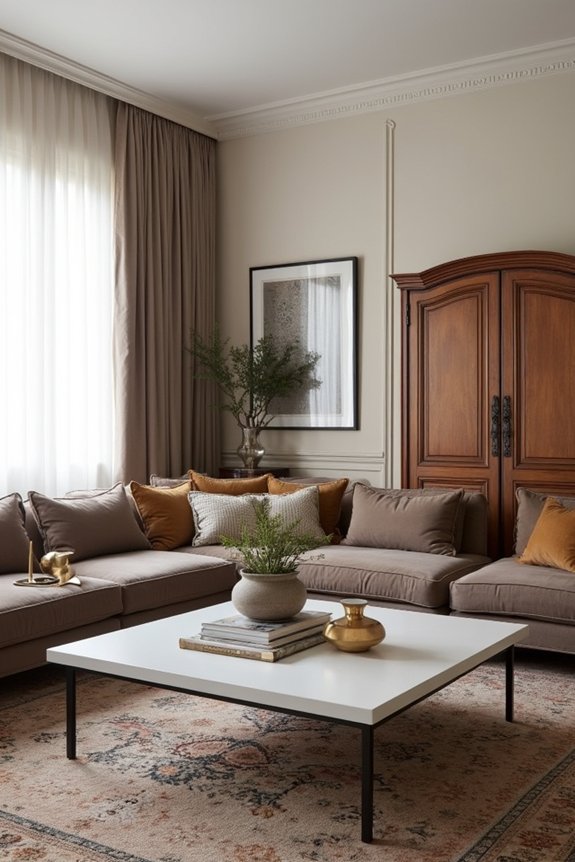
Why rush a good thing? I’ve learned that patience actually makes the mix work better. Instead of buying everything at once, I introduce one or two pieces every few months. This approach lets me see how new items interact with what I already have.
I start with a neutral anchor—a modern sofa or coffee table—then layer traditional accents gradually. A patterned rug here, ornate lighting there. I maintain a consistent color palette throughout: blues, greens, ochres, brass, and wood tones. This balance keeps everything cohesive.
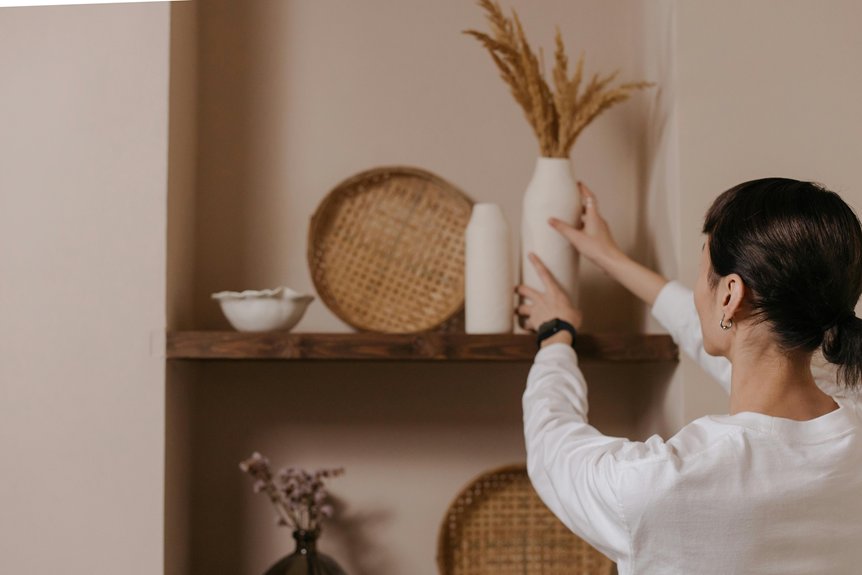
I also create breathing room on shelves and surfaces. Each new addition needs purpose and visual weight. Planning acquisitions across several months prevents that chaotic, overcrowded feeling. Slow and steady wins this design race.