To decorate in mid-century modern style, start by establishing a neutral base with whites, grays, and warm wood tones—this serves as your foundation.
Next, anchor the room with one or two iconic pieces like an Eames chair or sleek credenza, then add a statement rug to tie everything together.
Layer materials like wood, metal, and fabric for visual interest, keep window treatments efficient, and use negative space intentionally.
Mix vintage finds with contemporary pieces to maintain freshness.
The specifics on sourcing affordable pieces and styling everything together require attention to sourcing strategies and practical application techniques.
What Is Mid-Century Modern Style?
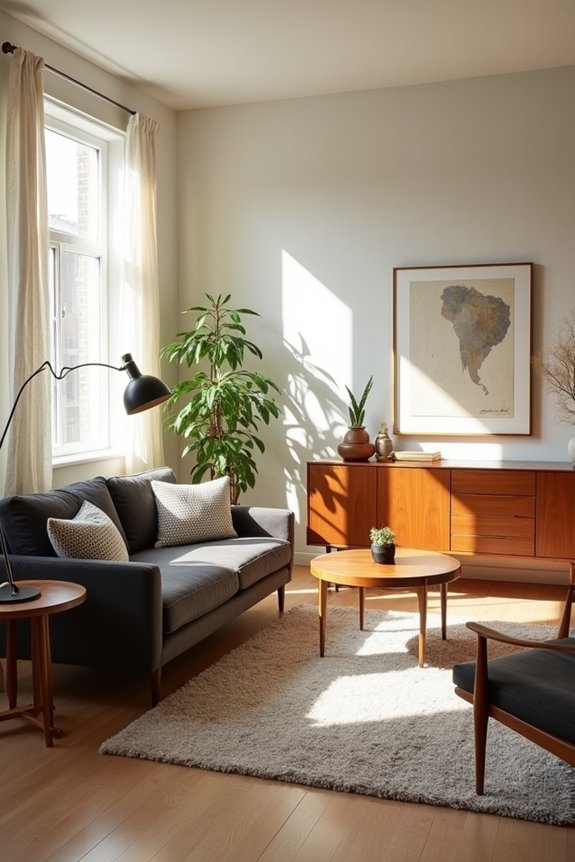
Ever wondered why some spaces feel both timeless and fresh at the same time? That’s mid-century modern at work. I’d describe it as design that refuses to age, blending post-World War II optimism with practical affordability.
The style ditches ornate fussiness for clean lines and functional forms. You’ll notice open floor plans with connecting rooms that flow without interruption. Materials matter too—steel, concrete, and timber create that authentic vibe, though molded plastics add personality.
What stands out? Mid-century modern welcomes you in. It’s not pretentious or rigid. Instead, it celebrates streamlined beauty and honest construction. The movement drew from Scandinavian design, bringing international sophistication home. Whether you’re minimalist or eclectic, this style adapts to how you actually live, making spaces work for your needs.
The Essential Color Palette for Mid-Century Spaces
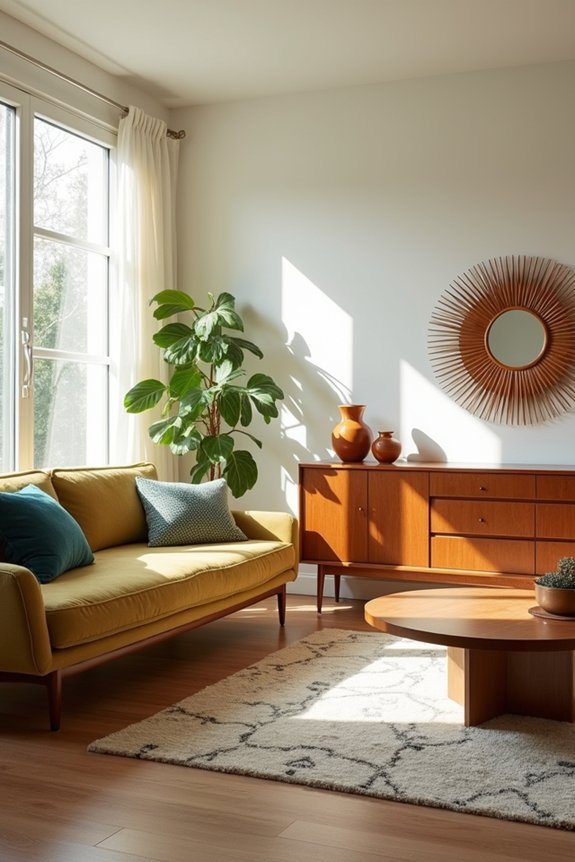
When I first tackled mid-century modern design, I realized the approach isn’t in slathering every wall with color—it’s in building a smart foundation of neutrals like whites, grays, and warm tans that provide breathing room for your space. I then layer in those punchy accent colors (think coral, mustard yellow, or teal) through textiles like rugs, cushions, and throws, which gives me flexibility to switch things up without repainting. This balanced approach keeps the clean, minimalist vibe intact while making sure my room actually feels alive instead of sterile.
Neutral Base Tones
How do you create a mid-century modern room that doesn’t feel cold or sterile? Start with a solid neutral base. Wood browns, warm grays, and soft tans create the foundation that makes a space feel inviting rather than clinical. These muted tones work well because they’re forgiving—they let your color palette breathe without demanding attention.
Think of your neutral base as a canvas. Use it on walls, larger furniture pieces, and flooring to establish visual calm. This approach gives you flexibility later when you’re ready to add those signature mid-century pops of color—think soft pinks or muted blues.
The benefit? Your neutrals do the heavy lifting, so you’re not fighting competing tones. You’re building something cohesive that actually feels like home.
Bold Accent Hues
Now that you’ve got your neutral foundation locked down, it’s time to have some fun—because mid-century modern isn’t about playing it safe. This is where your bold accent hues come in. I’m talking pinks, blues, oranges, and yellows that stand out against your muted base. The approach? Don’t go overboard. These colors work best as strategic pops on pillows, artwork, or a burgundy rug that grounds everything together. Your mid-century modern color palette thrives on contrast without chaos. Pair bright accents with natural wood and metal to keep things balanced. Think of your bold hues as the personality in the room—they’re what make your space feel retro yet distinctly contemporary. That’s how you get it right.
Start With Clean Lines and Simple Forms
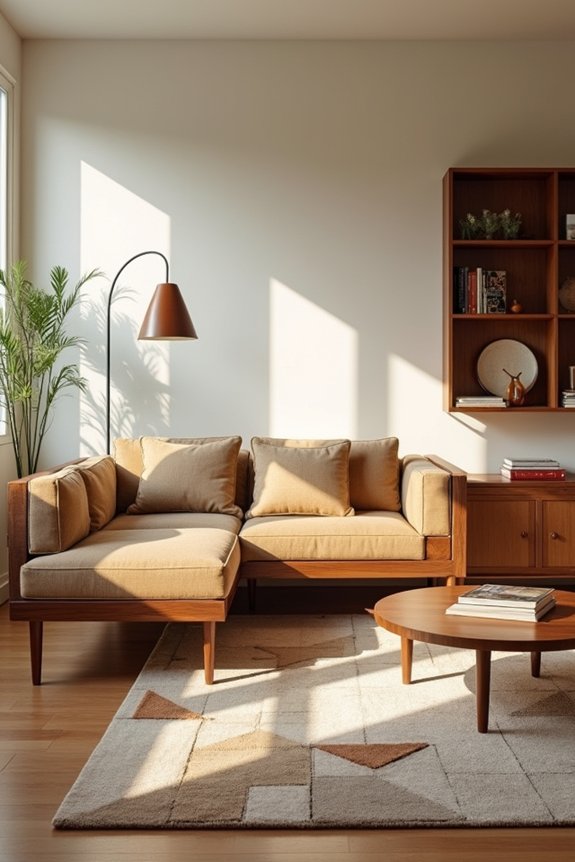
I’ll start by choosing furniture with straight lines and minimal ornamentation—think clean-edged sofas and tables without fussy details—because they’re the backbone of mid-century modern style. You’ll want to embrace negative space by leaving breathing room around your pieces; I learned this the hard way after cramming too much into a small living room and creating visual chaos instead of calm. By selecting items with uncluttered profiles and letting key pieces stand out through the openness, you’re applying minimalist design principles as your guide to a space that feels considered and lasting.
Embracing Minimalist Design Principles
Why does mid-century modern design feel so revitalizing compared to maximalist spaces crammed with every decorative object you’ve ever loved? The answer lies in embracing minimalism. Negative space isn’t wasted space—it’s breathing room for your eyes and mind. When you declutter, you’ll notice that fewer items actually highlight the pieces that matter most. Focus on functional furniture with straightforward geometries: rectangular tables, square-backed chairs, low-profile sofas. Each piece should earn its place by serving a purpose. Store items in multifunctional consoles rather than scattering them around. This approach creates calm, intentional rooms where design supports your lifestyle instead of competing for attention. The result: spaces that feel balanced and purposeful.
Selecting Furniture With Straight Lines
With your space decluttered and your mind clear about what matters, you’re ready to fill it with furniture that actually looks the part. I’m talking straight lines and geometric forms—the backbone of mid-century modern style.
Start by seeking pieces with clean, uncluttered silhouettes. Look for sofas, tables, and cabinets featuring crisp angles rather than curves. These open silhouettes keep your room feeling spacious and purposeful, not cramped.
Slender legs matter more than you’d think. They lift furniture off the ground visually, emphasizing negative space and that airy quality you’re after. A low-profile credenza with tapered legs works well.
Don’t overthink it. Your goal is selecting foundational pieces that communicate sophistication through simplicity. These straight-lined basics become your style’s solid ground floor.
Prioritizing Negative Space And Openness
Now that you’ve got those clean-lined pieces selected, here’s what matters: you’ve got to let your furniture breathe. I learned this the hard way by cramming too much into my living room—it felt chaotic, not designed with care.
Negative space is your advantage. Leave gaps between pieces. Skip the urge to push everything against walls. Those uncluttered silhouettes you’ve chosen deserve room to exist without competing for attention.
Think of your space like a gallery. Museums don’t crowd paintings together, right? They space them with purpose. Your furniture needs that same approach.
Raised legs on chairs and tables amplify openness by revealing floor space beneath. Arrange seating to encourage eye movement across the room, not clustering everything in one corner. Openness isn’t emptiness—it’s deliberate breathing room that makes your space feel both calm and welcoming.
Choose Iconic Furniture Pieces as Your Foundation
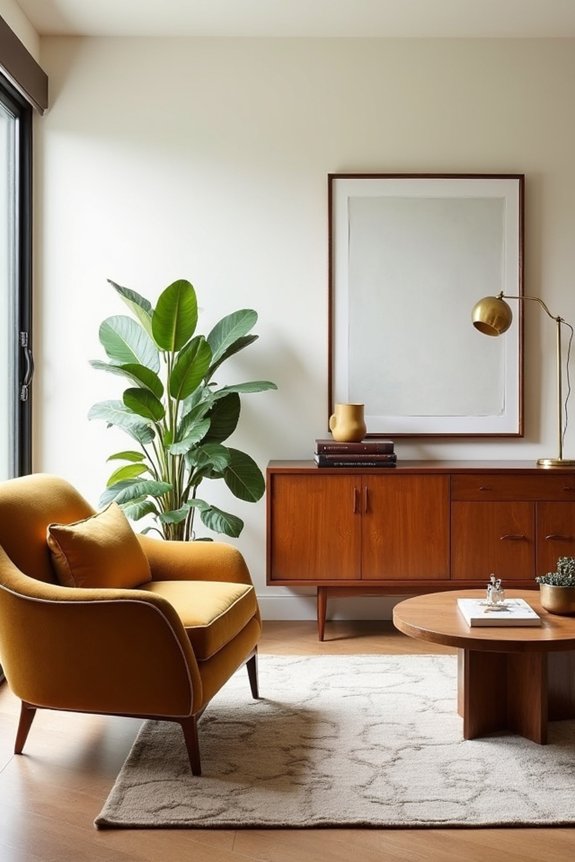
How do you build a mid-century modern room that actually feels authentic instead of like you raided a thrift store? Start with iconic pieces like the Eames Lounge Chair or Noguchi Coffee Table. These aren’t just pretty—they’re the DNA of the style. They anchor your space with genuine mid-century furniture credibility.
I’m not saying you need to spend a lot of money immediately. But one or two investment pieces signal to your room (and yourself) that you’re serious about this aesthetic. Think of them as your style foundation.
From there, you’ll build outward with confidence. Your iconic anchors establish the language your space speaks. Everything else follows their lead in a natural way. That’s how you avoid looking like you’ve just collected random vintage finds.
Select a Statement Rug to Ground Your Room
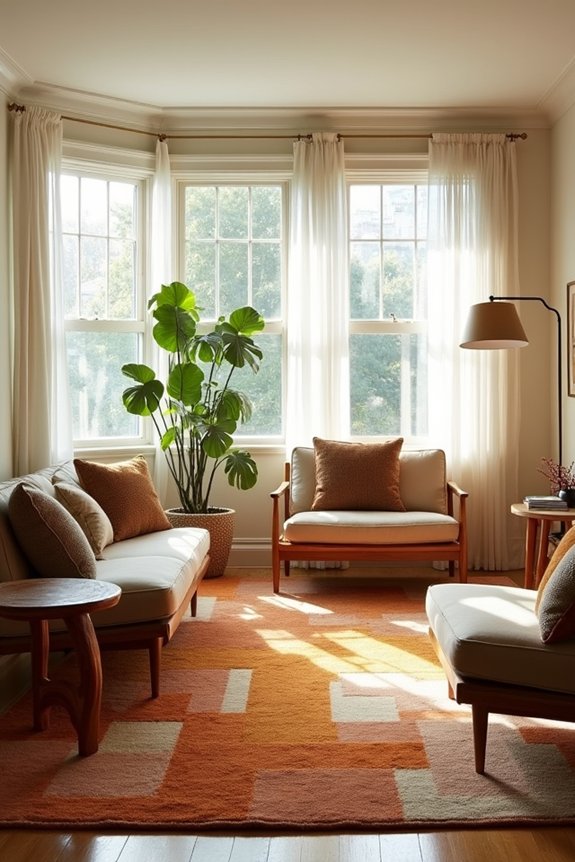
You’ve got your iconic furniture anchors in place—now it’s time to ground the whole room with a statement rug that ties everything together. I learned this the hard way after floating a sofa in empty space like a confused sailboat.
Your rug acts as a grounding anchor, pulling your mid-century color palette together while defining your seating area. Here’s what I focus on:
- Choose wool or flat-weave textures that balance sleek wood and metal furniture without looking fussy
- Size strategically so the rug extends beyond your furniture’s front legs, creating that cohesive, airy feeling
- Layer thoughtfully with a large base rug and smaller overlays for warmth and visual depth
A properly placed rug creates intentional design. Your room will finally feel deliberate instead of accidental.
Layer Wood, Metal, and Fabric for Warmth
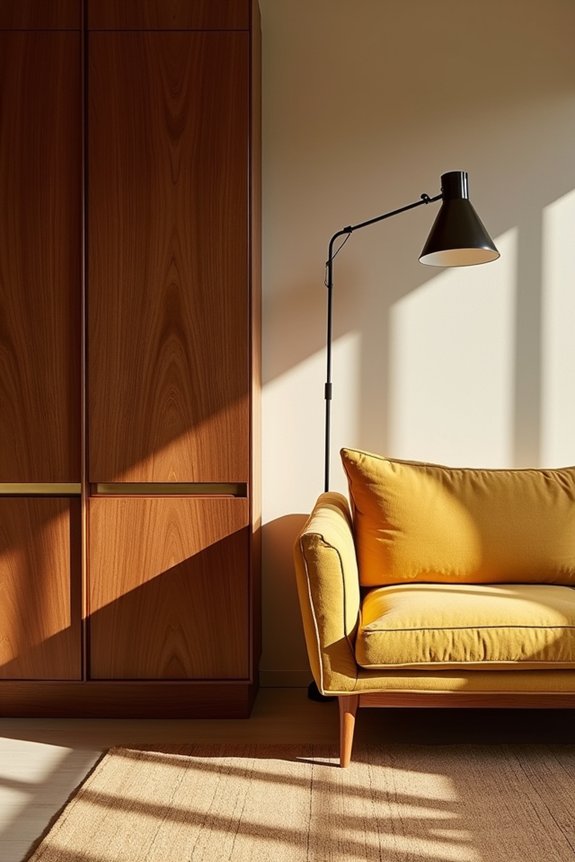
With your rug anchoring the space, it’s time to bring real warmth into the room by mixing three essential materials: wood, metal, and fabric. Layering these mid-century materials creates the depth and visual interest a room needs.
| Material | Color/Finish | Purpose | Example |
|---|---|---|---|
| Wood | Warm brown, tan | Foundation | Coffee table, credenza |
| Metal | Brass, brushed steel | Accent | Lamp base, shelf brackets |
| Fabric | Linen, wool, mohair | Softness | Chair upholstery, throw pillows |
| Mixed | Combination | Multifunctional | Bar cart, storage bench |
The texture contrast matters most. Pair smooth wood surfaces with woven fabrics and tactile metals. This balance—mixing rectangular and rounded shapes—keeps things visually interesting without feeling chaotic. Credenzas and shelving units combining all three materials unify warmth and practicality in a functional way.
Use Statement Lighting as Your Focal Point
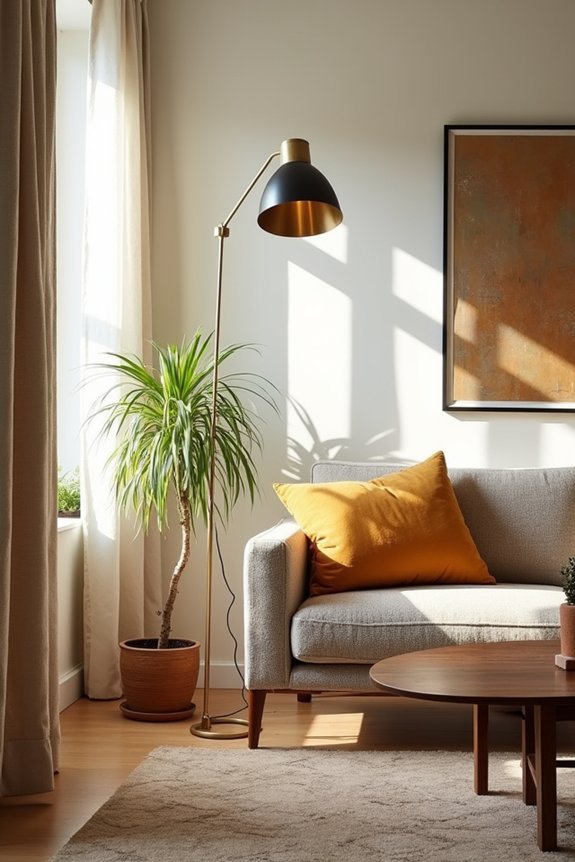
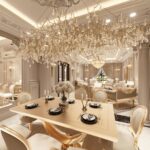
What gets a room’s attention faster than the right light fixture? A mid-century lighting piece does exactly that. Statement lighting draws eyes upward with sculptural forms like cluster pendants or arc floor lamps. This approach changes a room’s character.
Here’s how to do it:
- Choose mixed textures—brass, glass, and fabric pieces complement mid-century wood and metal well
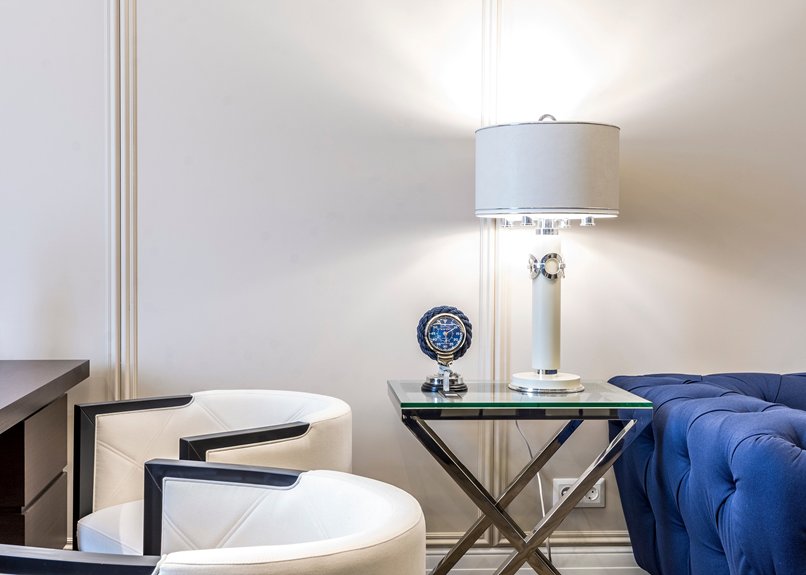
- Define zones strategically—pair bold chandeliers over dining areas with subtler table lamps in seating spaces
- Emphasize artful design—select sculptural pendants rather than purely functional fixtures
Balance matters. You don’t want your lighting overpowering clean lines and natural materials. When you get this right, that lighting becomes the conversation starter your space deserves.
Balance Bold Accents With Neutral Walls
How do you keep a room from feeling like a circus when you’re really into statement pieces? The approach is balancing bold accents with neutral walls. Pairing a burgundy rug or black-beamed ceiling against calm, light-colored walls creates that cohesive mid-century modern look.
| Bold Element | Wall Color | Effect |
|---|---|---|
| Burgundy rug | Soft beige | Warm, grounded |
| Black ceiling beams | Cream | Sophisticated focus |
| Patterned chair | Pale gray | Controlled drama |
| Orange upholstery | Off-white | Balanced pop |
| Metal fixtures | Light taupe | Modern contrast |
Start with that neutral base, then let one or two statement pieces shine. Mix high-contrast textures—wood, fabric, metal—without overwhelming the room. Use color sparingly on accessories while keeping walls understated. This balance keeps your mid-century modern aesthetic feeling deliberate and organized.
Design Multi-Functional Furniture for Smaller Spaces
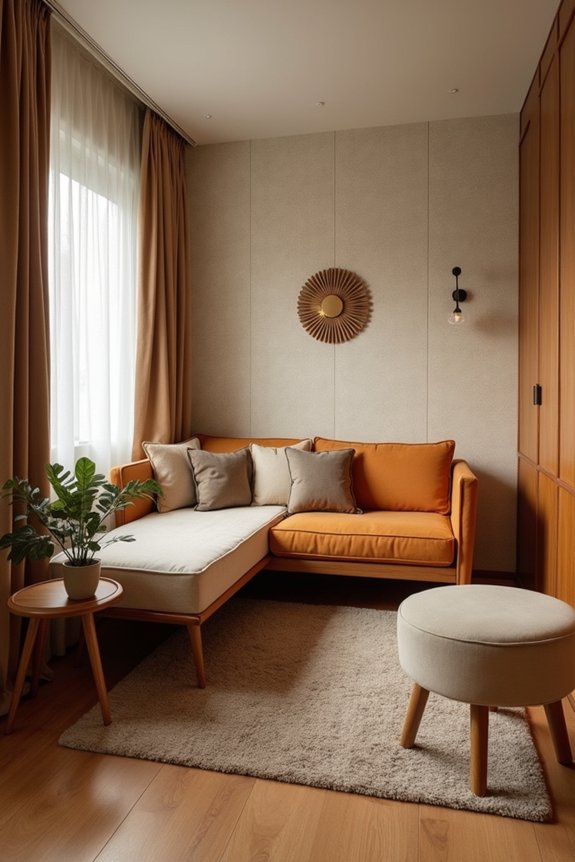
When you’re working with limited square footage, picking furniture that does double duty is an effective strategy—think credenzas that hide storage while serving as TV stands, or accent chairs that flank your sofa to add seating without eating up floor space. You don’t need to sacrifice style either; mid-century pieces like the iconic Eames Lounge Chair pack comfort and function into a slim footprint that won’t overwhelm your room. You can reupholster thrifted chairs in period-appropriate fabrics on a budget, refreshing your look while keeping things practical and airy.
Space-Saving Furniture Solutions
Caption this: you’re staring at your small living room, wondering how you’ll ever fit in a sofa, seating, and storage without the space feeling like a sardine can.
I’ve been there. That’s where space-saving, multifunctional furniture comes in. Mid-century modern design actually works well in tight quarters because it prioritizes smart solutions over bulky pieces.
Here’s what I’ve found works:
- Slender-legged furniture creates an illusion of openness and keeps your floor visible
- Multifunctional credenzas serve as TV stands, sideboards, and storage simultaneously
- Storage ottomans and bar carts handle decor, supplies, and surfaces without adding clutter
I reupholstered my old chairs in classic mid-century fabrics instead of buying new ones—it’s affordable and refreshing. Accent chairs placed opposite your sofa provide flexible seating while maintaining that open-air feeling you’re after.
Maximizing Function And Style
The real appeal of mid-century modern design in small spaces isn’t about cramming everything in—it’s about choosing pieces that serve multiple purposes without looking like they’re working hard. Multifunctional furniture makes tight layouts smarter and more stylish.
| Furniture Piece | Primary Function | Secondary Function | Storage Benefit |
|---|---|---|---|
| Credenza | TV Stand | Display Surface | Hidden Compartments |
| Bar Cart | Glassware Display | Book Storage | Mobile Organization |
| Island Table | Dining Surface | Work Counter | Shelving Below |
| Accent Chairs | Seating | Room Divider | Flexible Placement |
These storage solutions keep surfaces clutter-free while maintaining that clean mid-century modern aesthetic. Slim-legged sofas and moveable accent chairs let you reconfigure your space without feeling boxed in. Layer durable materials—wood, metal, leather, fabric—to blend function with form. You’re not just decorating; you’re creating a space that adapts to your life.
Create Movement With an Open Floor Plan
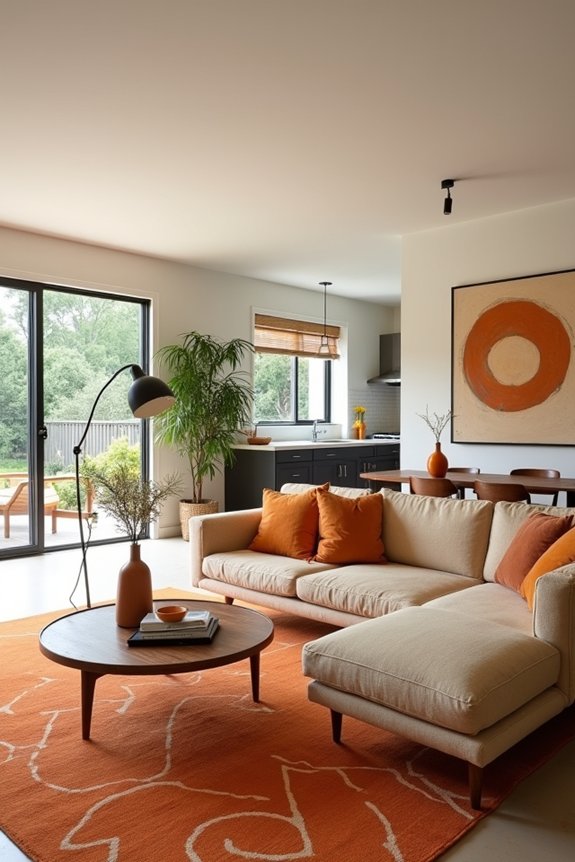
How do you make a room feel bigger without knocking down walls? Embracing an open floor plan in mid-century modern design works well. By removing unnecessary barriers, you create seamless movement between living, dining, and kitchen spaces.
Embrace an open floor plan to create seamless movement and make even modest spaces feel spacious and connected.
Here’s what to focus on:
- Minimize interior walls to enhance sightlines and allow your eye to travel freely throughout the space
- Use furniture placement to define zones instead of relying on physical dividers, maintaining that airy feeling
- Position key pieces—like a striking credenza or pendant light—to anchor each area without cluttering the flow
Large windows and glass walls blur indoor-outdoor boundaries, amplifying openness. Pairing slim-profile, modular furniture with exposed legs preserves airiness throughout. This approach changes how you move through your home, making even modest spaces feel spacious and connected.
Bring in Organic Forms and Natural Materials
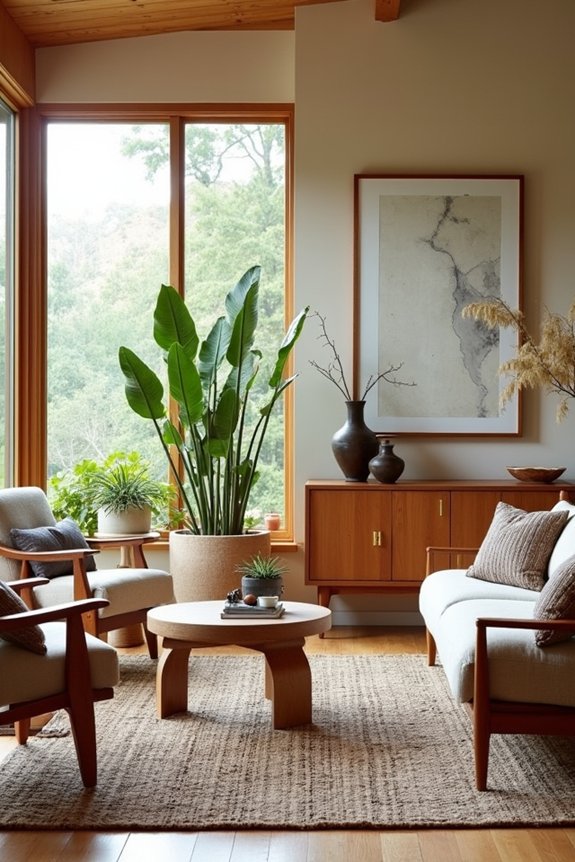
Most mid-century modern spaces I’ve seen that really work do one thing well: they balance sleek, geometric lines with curves and natural textures that feel alive. I’ve learned that organic forms—like sculptural tables and lounge chairs with flowing lines—anchor a room without overwhelming it. Pairing these with natural materials such as wood, leather, and stone creates the depth I was missing in my early attempts.
I lean on an earthy palette of warm browns, olive greens, and muted ochres as my grounding backbone. Then I layer in woven textiles and hair-on-hide pieces for tactile richness. Large windows flood my space with light, while potted plants and strategically placed boulders reinforce that connection to the natural world. It’s honestly simpler than I expected.
Keep Window Treatments Minimal and Modern
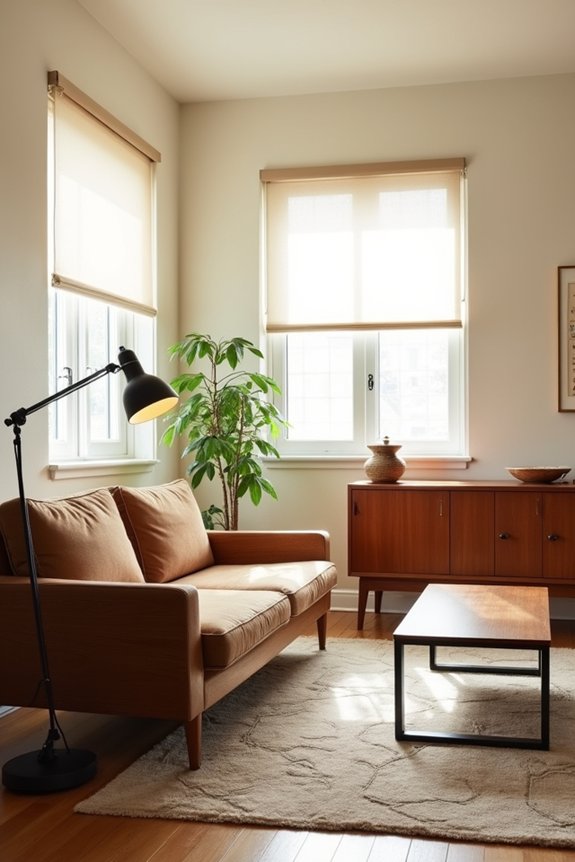
When I first started decorating my space, I realized that heavy curtains weren’t doing me any favors—they blocked out the light and made everything feel cramped, which is the opposite of what mid-century modern is all about. Instead, I’ve learned that you’ll want to focus on window treatments with clean lines and simple designs, like roller shades or lightweight woven blinds, that let natural light flood in while keeping the room feeling open and airy. The key is picking treatments that complement your furniture and architectural bones rather than stealing the show, so think minimal hardware, solid neutral colors, and nothing fussy or over-the-top.
Clean Lines And Simplicity
The beauty of mid-century modern window treatments lies in their restraint—and I mean that as a compliment. When I first embraced this style, I ditched my heavy drapes and discovered how much lighter my space felt. Clean lines and minimalism aren’t boring; they’re deliberate.
Here’s what I’ve learned works best:
- Choose flat roman shades or roller blinds in solid, muted tones like cream, gray, or soft brown
- Skip ornate fabrics—opt for lightly textured materials that keep your view uncluttered
- Maximize natural light by selecting streamlined options that tuck neatly away
The mid-century approach means your window treatments fade into the background, letting your room’s architecture shine. Restraint feels luxurious when you’re part of this design community.
Natural Light And Functionality
I learned this the hard way: heavy curtains kill the whole mid-century vibe. Instead, I use sheer, light-filtering fabrics in neutral tones that soften harsh glare while maintaining that essential openness mid-century design demands. Roller shades and flat Roman shades sit flush against walls, maximizing visible glass and preserving clean sightlines.
Natural light works on two levels—visual and practical. Large, unobstructed windows let you layer your space smarter. Rather than relying on drapery to define zones, use rugs, seating arrangements, and strategic lighting instead.
Keep fabrics in warm woods and earthy neutrals that echo your room’s palette. This approach respects both functionality and that signature mid-century openness you’re after.
Curate Art and Collections to Add Personality
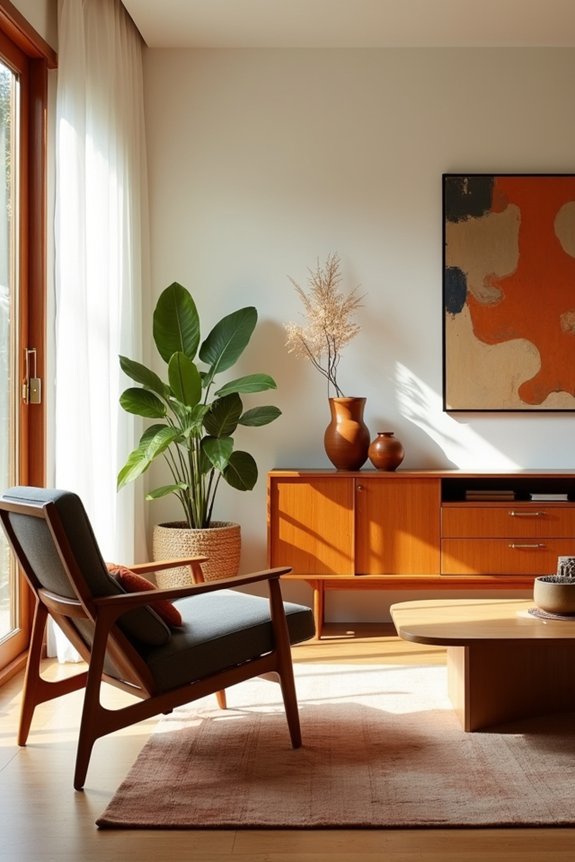
How do you turn a room into one that feels distinctly yours? I’ve found that thoughtful art collections and personal objects carry the most weight. Start by mixing vintage and contemporary pieces—they’ll keep your space feeling current without clashing with mid-century furniture lines.
Here’s what I’ve learned works:
- Layer curated displays with heirloom urns, family photographs, and meaningful objects that tell your story
- Balance bold artwork with calm textures like sheepskin and boucle to prevent visual chaos
- Position pieces strategically near architectural features to guide how your eye moves through the room
The richness comes when you stop treating art as decoration and start treating it as a conversation with your space. Your collections become the room’s personality—and honestly, that’s where a sense of belonging truly begins.
Mix Vintage Finds With Contemporary Pieces
Once you’ve settled on the pieces that tell your story, you’re ready for the fun part—mixing eras together so your space doesn’t feel stuck in any one decade. I’ve learned that vintage finds work best when paired with contemporary pieces. The trick? Balance authenticity with freshness. I anchor my rooms with one or two key mid-century modern items—like a sleek credenza or iconic chair—then layer in current textiles and art around them.
| Element | Vintage Approach | Contemporary Touch |
|---|---|---|
| Furniture | Wood with slender legs | Mixed metals and glass |
| Textiles | Classic leather | Modern fabric patterns |
| Lighting | Retro fixtures | Minimalist designs |
This strategy keeps everything feeling deliberate and prevents that museum vibe we’re all trying to avoid.
Find Affordable Mid-Century Pieces on Any Budget
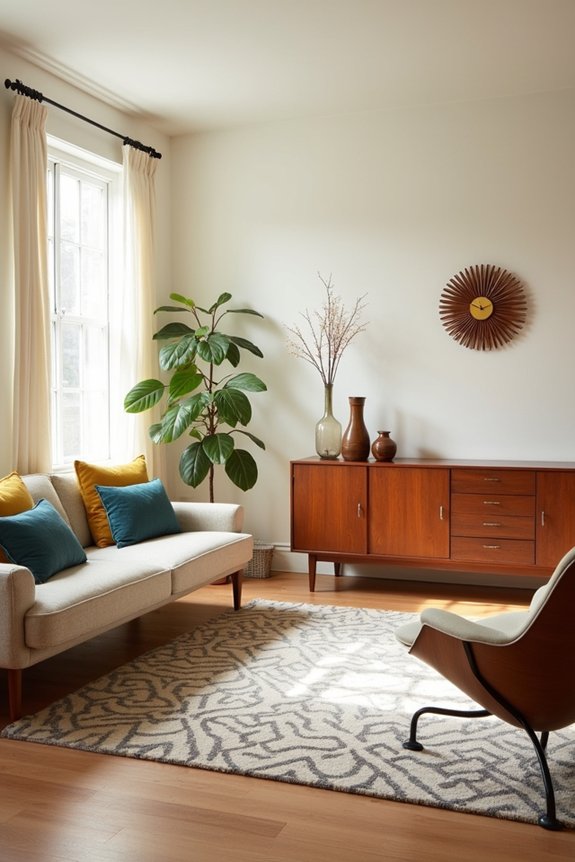
Where’s the best place to start hunting for mid-century treasures on a budget? I’ve found that thrift stores and antique shops are excellent sources for authentic pieces at reasonable prices. You don’t need to buy everything at once—I gradually built my collection by acquiring affordable finds over time.
Here’s my strategy for staying budget-conscious:
- Scout thrift stores and antique shops for genuine vintage pieces
- Explore online options like Etsy and big retailers for customizable items
- Reupholster existing chairs in mid-century fabrics yourself
The key? Start with a rug, then add pieces slowly. This approach lets you build your space without financial stress. Mixing vintage finds with contemporary accents keeps things fresh and balanced while honoring your budget.