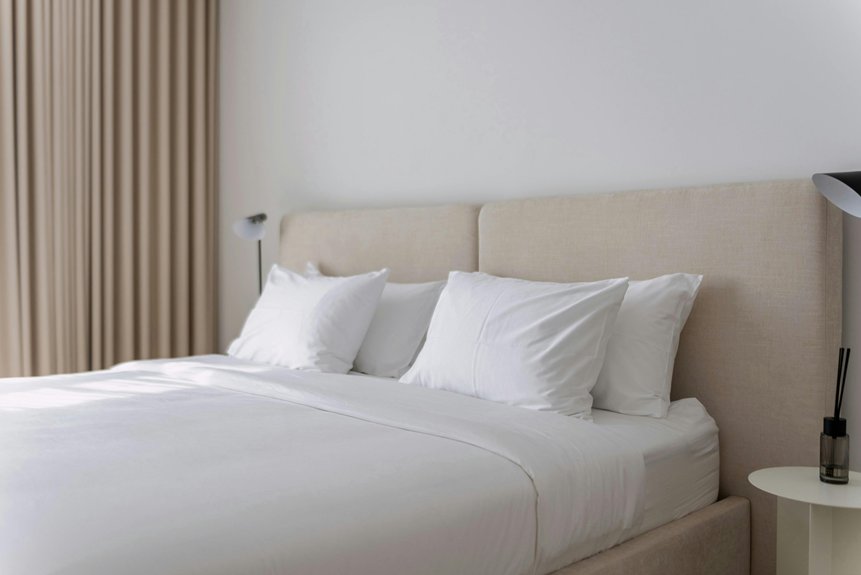
Start by defining your style and mood—calm minimalist or cozy farmhouse—before buying anything. Measure your room and note windows, doors, and built-ins. Pick a color palette that supports your vibe, then choose core furniture: a properly sized bed, nightstands, and maybe a bench. Layer your lighting with dimmable options, then add mirrors and artwork for personality. Prioritize sleep essentials over décor, use flexible pieces you can rearrange, and keep your vision consistent. There’s plenty more to discover about making each layer count.
Start With Your Vision: Define Style and Mood
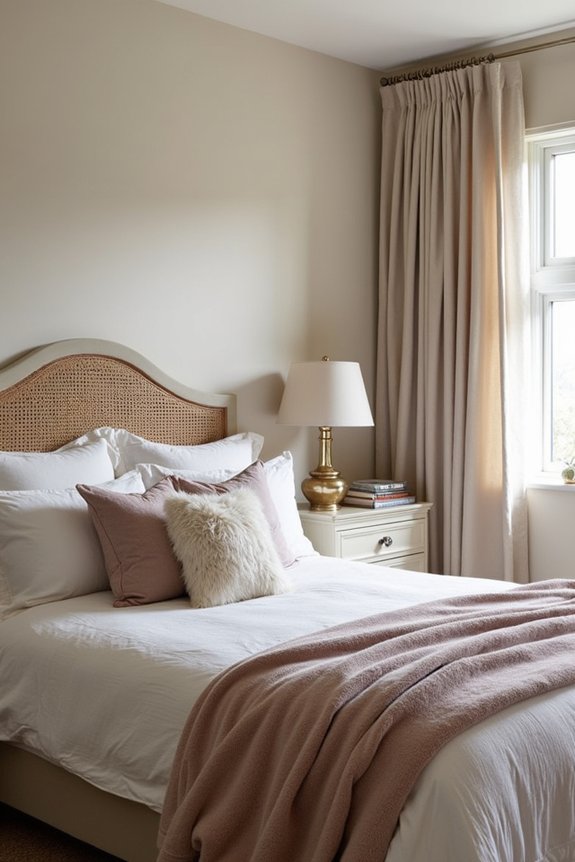
Ever stood in your bedroom and thought, “Something’s off, but I can’t quite put my finger on it”? That’s where vision comes in. Before you buy anything, define your style—whether you’re drawn to minimalist, modern, vibrant, or maximalist aesthetics. Your style shapes everything that follows.
Next, consider the mood you want to create. Do you crave calm or energy? Your palette should support this feeling. Pull inspiration from design blogs and galleries to see what resonates with you.
Take time to assess your actual space too. Note your room’s size, windows, doors, and built-ins. These architectural features matter. A clear vision and color palette guide every furniture and accessory choice you’ll make. You’re not decorating randomly anymore—you’re building with purpose toward something you’ll love.
Measure Your Room and Note What You’re Working With
Measurements are your decorating tool—grab a tape measure and jot down your bedroom measurements: length, width, and height. These numbers guide furniture placement and prevent awkward arrangements. Next, map your room layout by noting where windows, doors, and built-ins live. This matters because natural light affects color choices and furniture positioning.
Document architectural features like radiators, vents, and outlets—they’re constraints you’ll work around, not against. Take photos of your space from different angles. They’re helpful when visualizing layouts.
Record what your walls, ceiling, and floors are made of. Material pairings influence your design palette. Finally, identify anything blocking furniture movement. You’re creating a blueprint for success before decorating begins.
Pick a Color Palette That Sets Your Mood
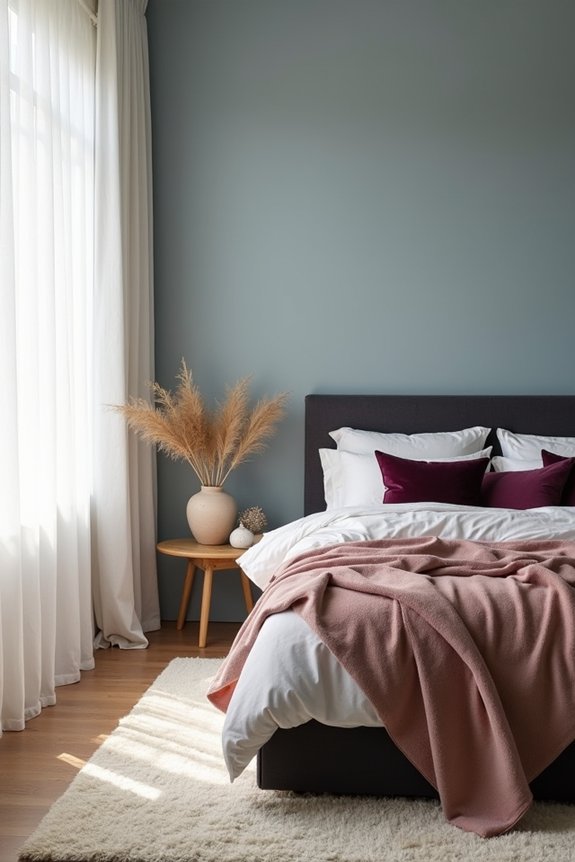
Now that you’ve mapped out your room’s bones, it’s time to choose the colors that’ll actually make you want to spend time there. Your color palette sets the entire mood, so think about what feeling you’re after. Want calm? Blues work beautifully. Craving luxury? Jewel tones deliver. Prefer simplicity? Go monochrome.
Here’s my honest tip: grab paint swatches and test them on your walls. I learned this the hard way after committing to a color that looked totally different at sunset than sunrise. Lighting matters tremendously—what seems perfect in morning light might feel off by evening.
Balance is key. Pair neutrals with subtle color pops through textiles and decor so your room doesn’t feel flat. Make sure your paint choice works well with your furniture finishes too. Everything should feel thoughtful and connected.
Identify Your Bedroom Style: Scandinavian, Farmhouse, Industrial, or Modern
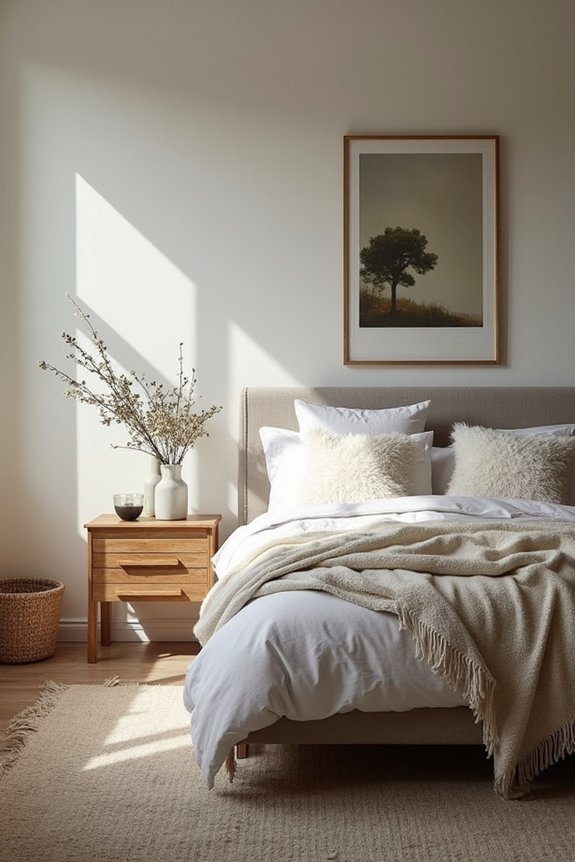
I’ve noticed that most bedrooms fall into a few distinct camps, and you’re probably already leaning toward one without realizing it. If you love clean lines and light wood, you’re thinking Scandinavian; if you’re drawn to vintage charm and comfortable textures, farmhouse might be calling your name; and if industrial vibes or sleek modern aesthetics speak to you, those are equally valid paths forward. The trick is identifying which style—or which blend of styles—actually matches how you want to feel when you walk into your bedroom at the close of day.
Scandinavian Simplicity Essentials
If you’re drawn to spaces that feel calm, uncluttered, and innately beautiful, Scandinavian design might suit your bedroom. This approach centers on a neutral palette of whites, soft grays, and pale tones that soothe the senses. You’ll want to prioritize light-filled spaces by letting natural light flood through sheer drapes or minimal window treatments. Natural materials like wood, linen, and cotton become your design anchors—they’re honest and timeless. Minimal furniture with clean lines and simple forms keeps visual noise down. Layer textures through soft throws and rugs in muted shades to add depth without clutter. This style creates a bedroom that functions as a sanctuary from life’s daily demands.
Modern Industrial Farmhouse Blend
The Modern Industrial Farmhouse Blend splits the difference between two apparently opposed aesthetics—and honestly, that’s what makes it work. You’ll combine raw industrial elements like concrete and exposed metal with warm farmhouse touches like reclaimed wood and soft linens. Your palette should mix charcoal or black with creams and taupes, creating balance between edgy and cozy. I’d suggest pairing sturdy metal-framed furniture with natural fiber textiles to soften that industrial edge. Your lighting deserves attention too—task lighting and ambient fixtures with wire details add functional style. Layer in imperfectly finished pieces and textured fabrics for that lived-in farmhouse vibe. This blend works because it doesn’t feel too polished or intimidating. You’re creating a space that’s modern yet inviting.
Choose Your Core Furniture: Bed, Nightstands, and Seating
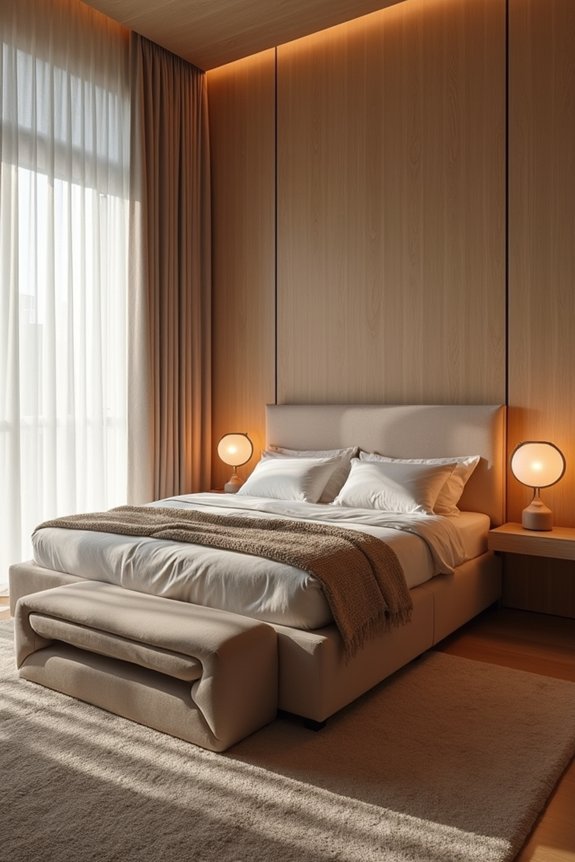
Once you’ve pinned down your bedroom style, it’s time to tackle the furniture pieces that’ll actually make your space functional—and that starts with your bed, which is the most important decision you’ll make since it sets the tone for everything else. You’ll want to pick a bed size that fits your room without making you feel cramped (a king in a tiny bedroom creates spatial issues), and then balance it out with properly sized nightstands that can hold your essentials without looking cluttered. Finally, add a seating piece—whether that’s a bench, ottoman, or chair—to establish the layout and give yourself a spot to actually use the room beyond just sleeping.
Bed Selection and Sizing
How do you pick a bed when there’s so much riding on that one decision?
Start by measuring your room—honestly. I’ve seen too many people squeeze a king into a shoebox and regret it. Your bed size should let you walk comfortably around it. Kings work well in spacious rooms, but smaller spaces might call for two twin beds or a compact platform bed instead.
| Room Size | Best Bed Size |
|---|---|
| Small (under 100 sq ft) | Twin or compact platform |
| Medium (100-150 sq ft) | Queen |
| Large (150+ sq ft) | King |
Next, invest in a sturdy bed frame or upholstered headboard—these anchor your whole room’s style. Pair it with appropriately scaled nightstands on each side for balance and storage. If space allows, add seating at foot of bed like a bench or ottoman. This turns your bedroom from purely functional into a more inviting space.
Nightstands and Seating Balance
Your nightstands aren’t just side tables—they’re the unsung heroes that either pull your bedroom together or create a cluttered mess. I’ve learned this the hard way. When choosing bedside furniture, think about what you actually need within arm’s reach: a lamp, your phone, maybe a book. Closed storage keeps essentials hidden and visual clutter at bay.
Balance matters here. Your nightstands should match your bed’s scale and style—not oversized or tiny. Pair them with seating at the foot of your bed, like a bench or ottoman, to ground the space without overwhelming it.
Don’t forget accessibility. Place outlets and USB ports where you can reach them easily. This simple thoughtfulness makes your bedroom a functional sanctuary where everything serves you.
Plan Your Layout for Flow and Usability
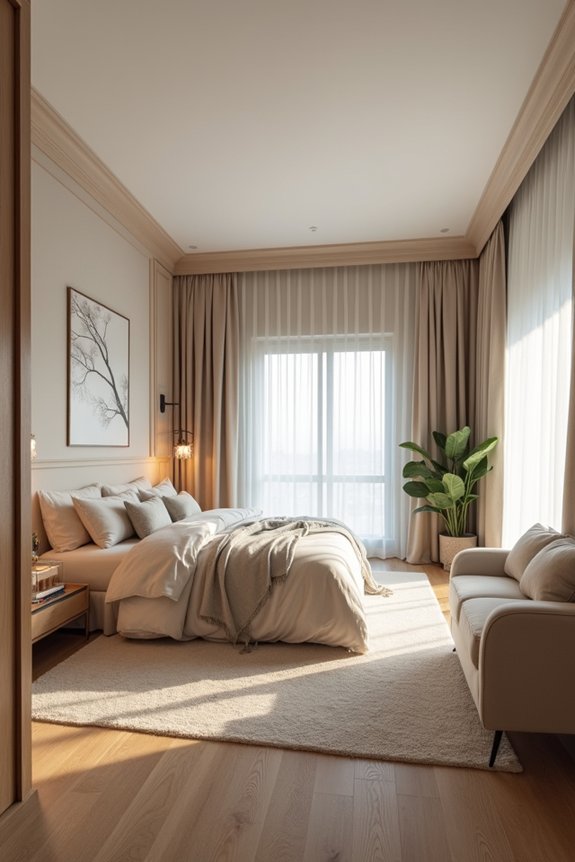
Where does your bed actually belong in your bedroom? That’s your starting point. I’ve learned that positioning your bed as a visual anchor—usually opposite the door or facing a window—creates natural flow throughout the space.
Next, I map out functional zones: sleep, storage, dressing, and seating areas. This prevents me from shuffling across the room constantly. I place nightstands within arm’s reach and keep clear pathways between zones.
Room dimensions matter. I measure doorways, windows, and built-ins before moving anything. This bedroom layout strategy prevents overcrowding and awkward furniture placement.
For tight spaces, I’ve discovered wall-mounted shelves and floating furniture work well. They maintain accessibility without taking up precious floor space. Your furniture placement directly impacts how smoothly you move through your bedroom daily.
Pick the Perfect Bed for Your Space
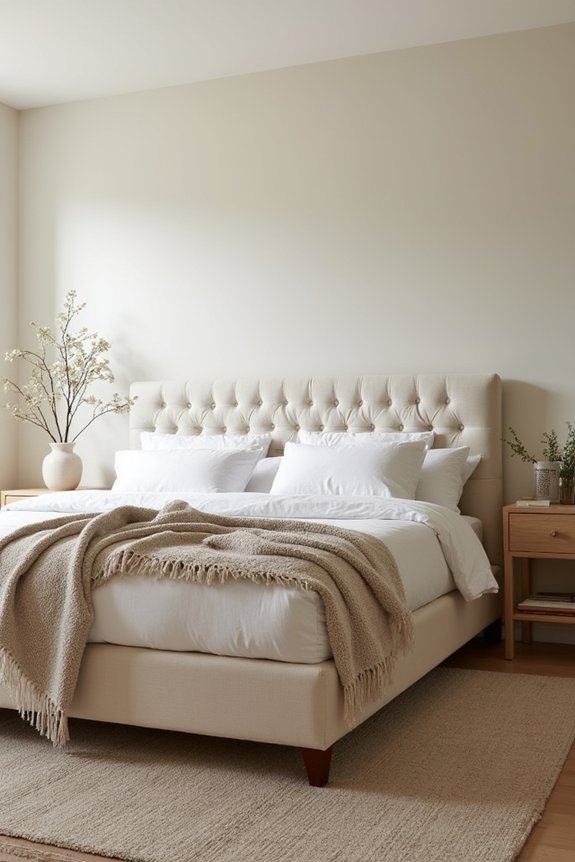
Your bed’s the anchor of your whole bedroom, so you’ve got to nail both the size and style—and honestly, those two things work together more than you’d think. I’ll walk you through sizing your sleeping space so it actually fits your room (not just your desires for sprawling out), and then we’ll talk about how your style choices can make that bed work well in your space. The good news is that with the right bed, you’re building something that’ll work hard for you and look good doing it.
Sizing Your Sleeping Space
How do you pick a bed that actually fits your room without making it feel like a furniture showroom? Start by measuring your space and planning your bed size carefully. You’ll want at least 2–3 feet of clearance around the bed for easy movement and access. This room clearance prevents that cramped feeling.
Next, consider your layout proportions. A king works well in a master bedroom, but in smaller spaces, a queen or twin is the better choice. Platform beds with storage are practical when you’re limited on square footage. The key is balancing your bed scale with nightstands and seating so traffic flows naturally.
Measure twice, buy once.
Style Meets Comfort Needs
| Style | Best For | Frame Type |
|---|---|---|
| Modern | Clean spaces | Low-profile platform |
| Traditional | Cozy rooms | Upholstered headboard |
| Minimalist | Tight layouts | Simple wood frame |
| Industrial | Bold aesthetics | Metal frame |
| Transitional | Flexible designs | Neutral upholstery |
Your bed size and layout balance matter equally. A king suits spacious master bedrooms well, while smaller rooms need smarter solutions. Consider how your frame’s scale matches your walls and allows comfortable movement around the space. Pick sturdy materials—you’re investing in years of restful nights. Match your headboard style to your overall aesthetic so everything feels cohesive. That’s when comfort meets function.
Layer Your Lighting for Ambiance and Task Work
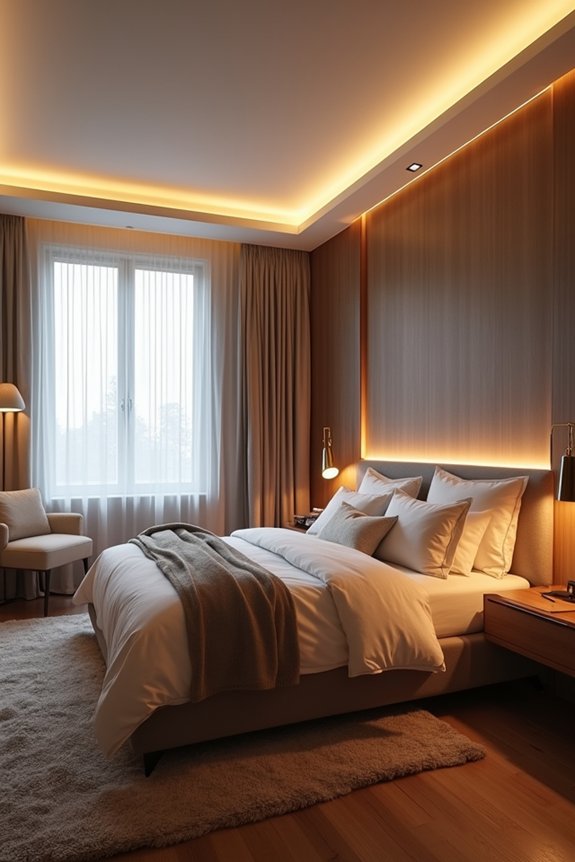
Ever notice how a bedroom lit by a single overhead fixture feels more like an interrogation room than a sanctuary? I’ve been there. That’s why I’m embracing layered lighting—and you should too.
A single overhead fixture turns your bedroom into an interrogation room. Layered lighting transforms it into the sanctuary you deserve.
Here’s my approach: I’m combining ambient, task, and accent lighting to match my mood and needs. I installed dimmable lights throughout, which improved the space significantly. For reading, I positioned bedside sconces at eye level, eliminating harsh glare that kept me squinting.
The most useful addition? A three-light dimmable system gives me flexibility. Bright for getting ready, soft for unwinding, dimmed for sleep. I paired fixtures with metal and glass that complement my decor, adding smart controls for scheduling.
Layer blackout shades with your lights, and you’ve created a space that transitions smoothly from energizing mornings to restful nights. That’s the sanctuary we’re all seeking.
Arrange Finishing Touches: Accessories and Personal Style
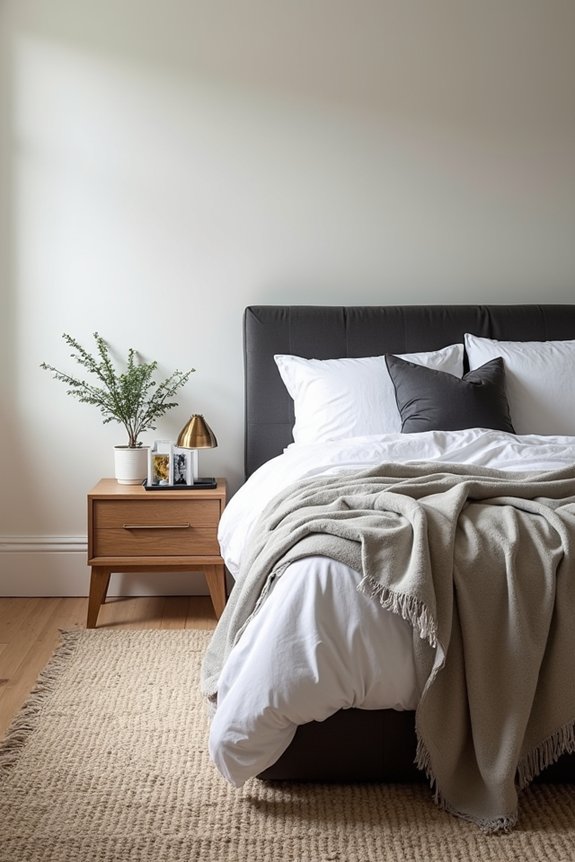
Now that your lighting’s working hard to set the mood, it’s time to dress up your bedroom with the accessories and personal touches that make it actually feel like *yours*. I’ve learned that the right accessories bring interest to a room, but restraint matters—I used to overcrowd surfaces and regretted it immediately.
| Accessory Type | Purpose | Pro Tip |
|---|---|---|
| Mirrors | Reflect light and expand space | Lean against walls for flexibility |
| Artwork | Add personality and color | Gallery walls create cohesion |
| Lamps | Layer lighting while looking stylish | Match your room’s aesthetic |
| Pillows | Introduce texture and comfort | Stick to your palette |
| Heirloom pieces | Tell your story | Display meaningfully |
Balance statement pieces with breathing room. Frame family photos, incorporate hand-painted items, and keep everything aligned with your personal style while maintaining visual harmony throughout.
Adapt Your Design Across Life Stages
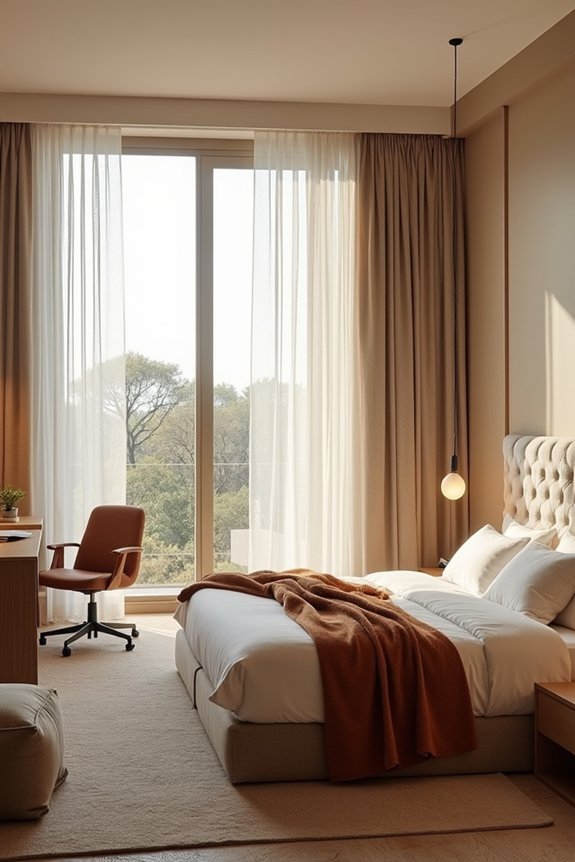
What if your teenager’s perfect room setup won’t work for a toddler—and that’s completely okay? Designing for growth means thinking ahead without overcomplicating it.
What actually works:
- Choose neutral color palettes as your foundation, then layer adaptable accents through removable wallpaper, throw pillows, and artwork that evolve with your child’s interests
- Invest in modular pieces like storage cubes and sectional bed arrangements that reconfigure as needs shift from crib to queen-sized bed
- Prioritize flexible lighting with adjustable fixtures and movable lamps so you’re not rewiring when tastes change
Starting with versatile basics lets you refresh the room’s personality without gutting the whole design. Your bedroom doesn’t need perfection today—it needs bones strong enough to grow alongside you.
Decide What to Splurge On: Sleep Essentials vs. Décor
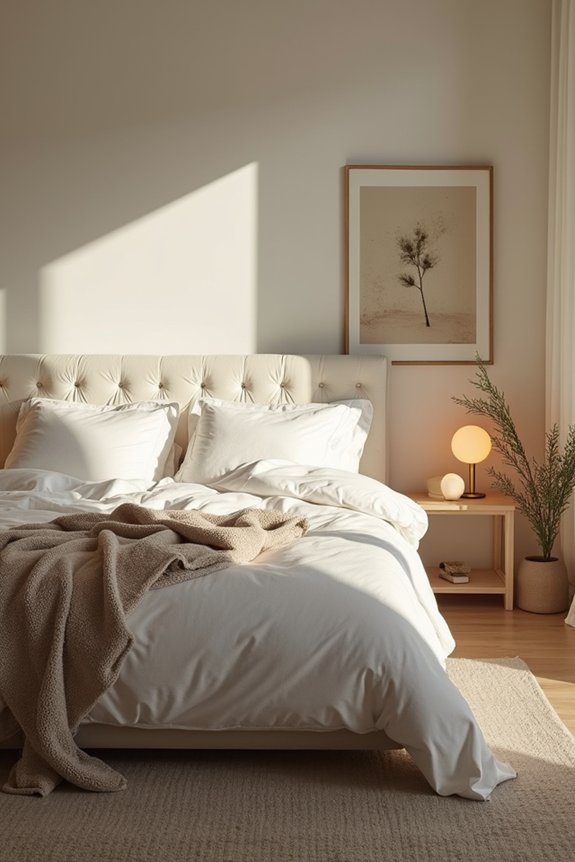
Your budget’s got limits—mine definitely does—so let’s talk about where your bedroom dollars actually matter. I learned the hard way: skimping on your mattress means suffering through nights, so that’s worth the investment. Quality linens follow close behind—they change how your bed feels and looks. Your pillows deserve attention too; proper support genuinely changes your sleep quality.
Now, here’s where I save without guilt. Rugs and nightstands refresh your space affordably. Window treatments sit in the middle—custom options control light well but cost more. Stock options work fine if you’re budget-conscious.
The takeaway? Prioritize sleep essentials over décor. Your body spends eight hours on that mattress. Your future self will thank you for choosing comfort over aesthetics.
Apply Design Principles to Maximize Your Space
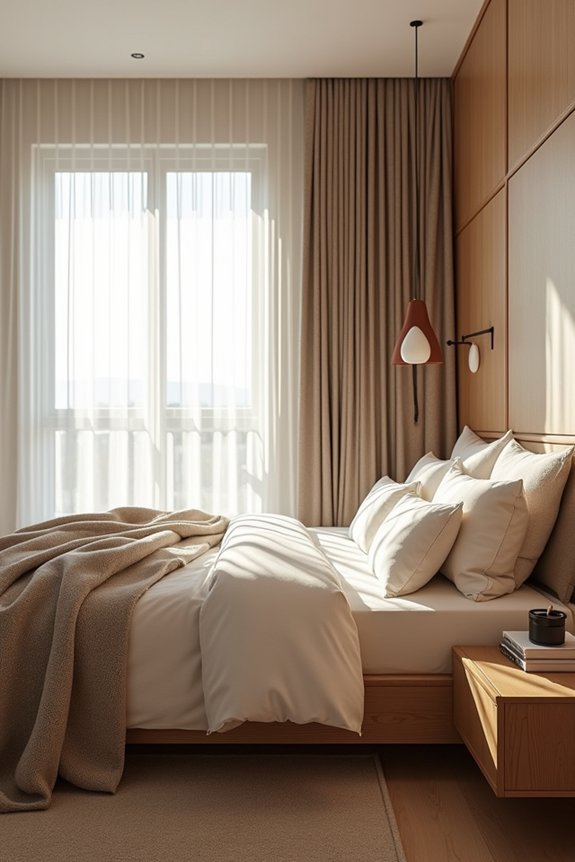
Ever walked into a bedroom that felt bigger than it actually was? That’s intentional design at work. I’ve learned that maximizing space starts with visualizing your style—whether minimalist, modern, or cozy—then letting that vision guide everything else.
Here’s what actually works:
- Plan your layout first by measuring dimensions and noting windows, then arrange furniture to create clear pathways and functional zones
- Layer your lighting with ambient, task, and accent lights to add depth without overwhelming the room
- Match scale carefully by pairing low-profile beds with appropriately sized nightstands to prevent visual clutter
The difference maker? Multi-functional storage. Wall-mounted solutions and storage benches keep your floor open while hiding the stuff we all accumulate. When you’re intentional about layout and scale, suddenly your bedroom doesn’t feel cramped—it feels purposeful.