Small bedrooms work well when you push your bed against the longest wall and position it near windows for natural light. Choose light, neutral colors and layer soft textures to expand the space visually. Multi-functional furniture—storage beds, ottomans with hidden compartments, built-in shelves—eliminates clutter while maximizing function. Add mirrors opposite windows to bounce light around, then ground everything with a muted-tone rug. Finally, arrange personal collections on a single wall with breathing room between pieces. Each strategy works individually, but together they create effective results.
Position Your Bed to Maximize Space and Light
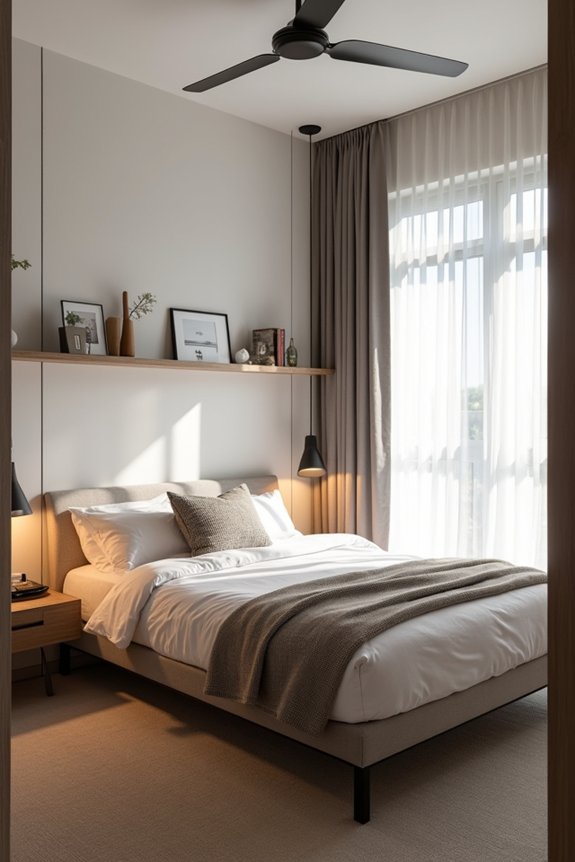
When you’re working with a small bedroom, your bed’s placement can significantly affect the whole room’s functionality—I learned this the hard way after shoving mine into a corner and wondering why I felt cramped. Push your bed against the longest wall to maximize space and create an open floor plan. Position it near a window to bring in natural light, then hang light curtains that let brightness pour through. Consider a divan with integrated storage underneath, which gives you under-bed clearance for hidden linens while keeping your footprint compact. This strategic bed placement improves how your small room feels and functions.
Choose Colors That Make Small Bedrooms Feel Larger
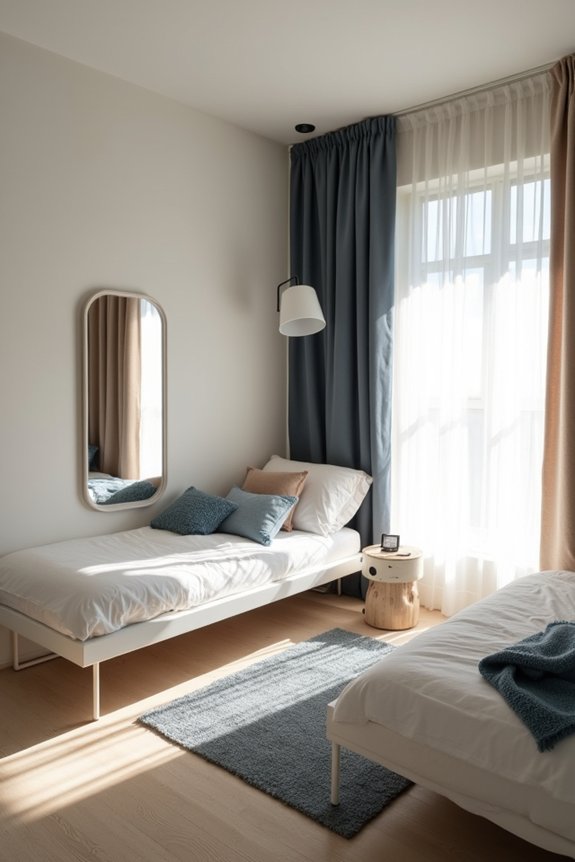
How much does color actually matter in a tiny bedroom? Quite a bit. Light wall colors and ceilings reflect more light, making small spaces feel bigger. Your best approach? Use a cohesive color palette with neutral tones and soft, unsaturated hues. White detailing on furniture and trim reduces visual clutter, allowing walls and ceiling to read as one continuous surface.
Monochromatic schemes work well—varying shades of the same color create cohesion without dividing the room visually. You don’t need bold colors to add personality. Layer in textures instead: warm wood, linen, and velvet accents add depth while keeping that airy feel. This approach changes how spacious your bedroom feels.
Select Furniture That Serves Double Duty
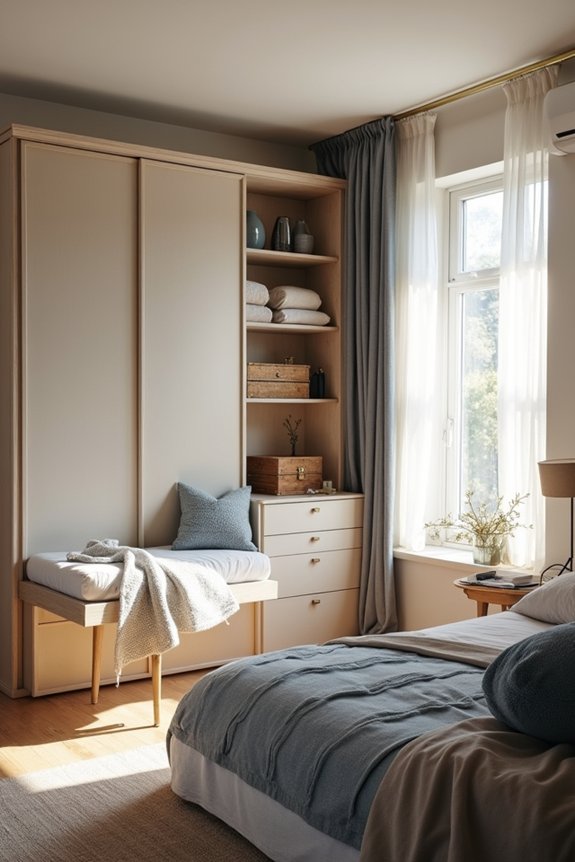
When I started decorating my tiny bedroom, I realized I was basically playing furniture Tetris—and I needed pieces that could pull double duty. Storage beds with built-in drawers let you stash everything from seasonal clothes to extra bedding without eating up floor space, while multi-purpose nightstands and seating options (think ottomans with hidden compartments or slim shelves) keep your surfaces functional and clutter-free. The trick is choosing furniture that works harder so your small room doesn’t feel cramped.
Storage Beds With Drawers
Ever noticed how a small bedroom can feel like a storage puzzle you’re constantly trying to solve?
I’ve found that storage beds with drawers are effective solutions for maximizing under-bed storage without sacrificing floor space. A platform bed or divan with integrated side drawers keeps everything accessible while maintaining a low profile. You’re getting a bed and a dresser rolled into one—which provides practical dual functionality.
| Bed Type | Storage Capacity | Space Saved | Best For | Cost |
|---|---|---|---|---|
| Storage bed with drawers | High | Significant | Small bedrooms | Moderate |
| Platform bed | Medium | Moderate | Minimal décor | Budget-friendly |
| Trundle bed | Variable | Good | Guest sleeping | Affordable |
| Built-in joinery | Maximum | Excellent | Custom spaces | Premium |
| Divan with side drawers | High | Significant | Compact rooms | Moderate |
Coordinate drawer fronts with your existing furniture—same wood tone or paint creates that organized, clean appearance you’re looking for.
Multi-Purpose Nightstands And Seating
Your nightstand can be more than a lamp-holder. In small bedrooms, multi-purpose furniture makes a real difference. A padded bench with a hinged top gives you seating, storage, and a surface for your lamp. Beds with built-in shelves or drawers flanking the headboard eliminate separate nightstands, freeing up floor space. A compact ottoman holds books and a lamp while staying mobile for cleaning. Corner alcove seating integrated with nightstand units maximizes space and creates a combined sleep-and-sit area. Under-bed storage complements these pieces well and reduces clutter. When furniture serves multiple functions, your small bedroom becomes more spacious and organized.
Build Vertical Storage Into Your Walls
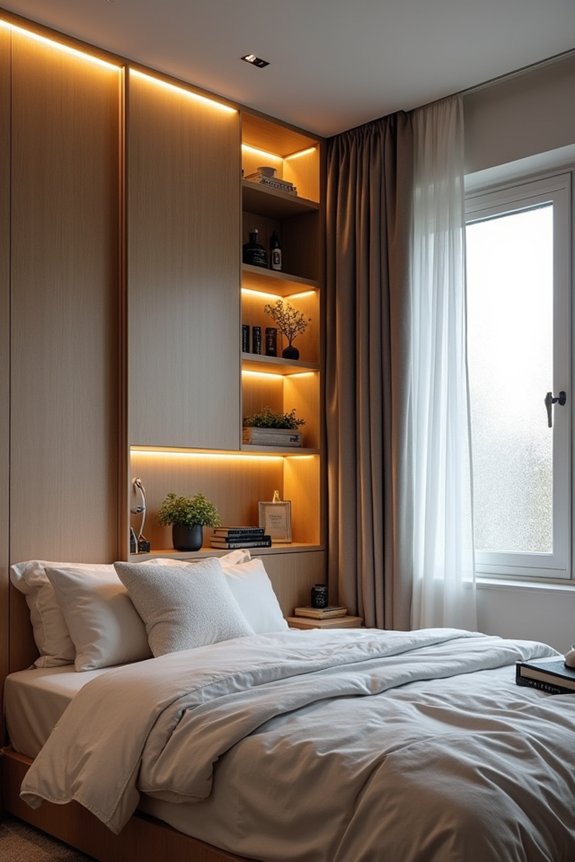
When you’re working with limited square footage, building storage directly into your walls is an effective solution for small bedrooms. You can install shelving above eye level to keep your visual sightline clear, flank your bed with built-in wardrobes that double as nightstands, and take advantage of those tall ceilings everyone forgets about. The trick is choosing finishes and hardware that blend with your walls so the storage feels like part of the room’s structure rather than an afterthought.
Shelving Above Eye Level
How’d you like to reclaim your floor space without sacrificing storage? Wall-to-ceiling shelves work well in small bedrooms for organization. When you install high shelves above eye level, you’re creating storage that doesn’t visually overwhelm your room.
The trick? Pair those lofty shelves with built-in drawers at eye level. This creates a natural rhythm that feels balanced. I use lightweight, powder-coated metal for my floating shelves because they’re sturdy yet unobtrusive.
| Material | Weight | Visual Impact |
|---|---|---|
| Metal | Light | Minimal |
| Recessed wood | Medium | Subtle |
| Solid oak | Heavy | Bold |
Plan around windows and radiators—you’ll maintain light flow and accessibility. Space-saving shelving is practical and helps make small spaces feel more spacious.
Wardrobes Flanking The Bed
Ever notice how nightstands eat up precious floor space in a small bedroom? I’ve solved that problem by flanking my bed with slim wardrobes that pull double duty as integrated nightstands. This approach works well for your room.
I opted for wall-to-wall cabinetry aligned with my bed’s headboard, creating a low-profile silhouette that doesn’t overwhelm the space. The key? Choosing tall, narrow wardrobes that exploit vertical space without hogging floor room. I added recessed shelving within the built-in storage to stash clothing, linens, and accessories neatly.
Here’s my trick: I painted the wardrobe doors to match my wall color. Suddenly, the cabinetry disappears visually, and my bedroom feels airier. Wardrobes flanking the bed provide practical storage while making your room feel more spacious.
Tall Ceiling Storage Solutions
Since small bedrooms waste precious ceiling height, I’ve learned to think upward instead of outward. Floor-to-ceiling cabinets maximize storage without stealing floor space. I’ve installed tall built-in shelving on high walls to stack folded clothes and boxes efficiently. Recessed storage tucked into alcoves keeps clutter hidden, which makes my space feel bigger. I prefer slim cabinetry that runs continuously along walls; it emphasizes height while maintaining an airy feel. Wall-mounted platforms extend vertically too, especially paired with under-bed drawers. Adding integrated lighting highlights the vertical lines and creates a unified look. Hidden storage behind wall panels provides concealed organization in your own room. You’re not just organizing—you’re making your bedroom smarter and lighter.
Add Mirrors and Lighting to Enhance Perceived Space
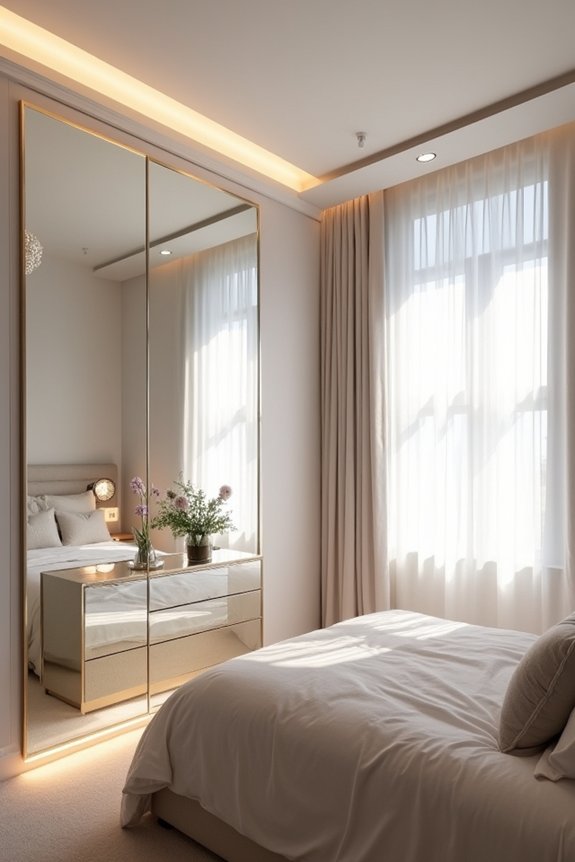
Want to make your small bedroom feel twice as big without knocking down walls? Mirrors and lighting work effectively together.
Here’s what I do:
- Place mirrors strategically opposite windows or beside light sources to bounce natural light around and visually expand the room
- Layer your lighting with sconces, task lights, and ambient ceiling fixtures to brighten every corner without creating clutter
- Use sheer window treatments to maximize daylight while keeping privacy intact
I’ve found that slim-profile lamps and reflective surfaces—like polished metals and glass—enhance brightness without eating up floor space. The key is creating depth through light bounces rather than cramming in furniture. When daylight floods through your windows and reflects off mirrors, that cozy bedroom feels more spacious.
Ground Your Room With a Statement Rug
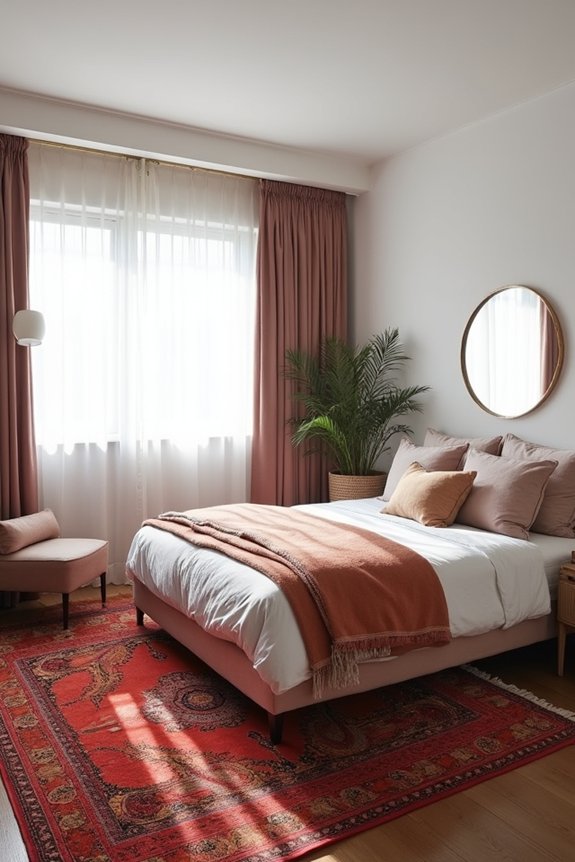
How does a single piece of fabric anchor an entire bedroom? A rug positioned under the bed and extending beyond the sides creates a defined zone that visually enlarges the space.
For small bedrooms, choose natural fibers with muted tones—they ground the room while coordinating with wood furniture. Avoid busy patterns that make everything feel cramped.
Want to add dimension without overwhelming your space? Layer a smaller rug on top. This technique unifies your furniture and camouflages limited floor area, creating a bedroom that feels deliberate and well-designed.
Layer Personal Collections Without Creating Visual Clutter
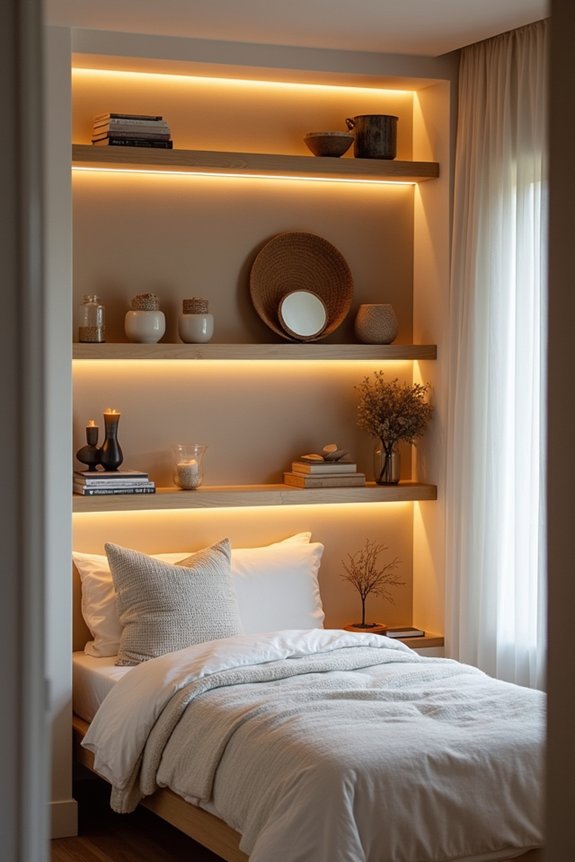
A few meaningful pieces on a single wall shelf work better than a chaotic explosion of stuff everywhere. In a small bedroom, restraint is your practical tool.
Curating collections thoughtfully keeps them functional as decor rather than clutter. Here’s what actually works:
- Group 3-5 items on one shelf or photography wall using cohesive framing in neutral tones
- Mix scales deliberately—pair small keepsakes with a larger piece for visual interest
- Rotate seasonally to refresh your display without expanding its footprint
The negative space around your shelf display matters as much as what’s on it. Let breathing room exist. Your personal collections deserve thoughtful staging in your small bedroom, not cramped conditions. This approach makes each piece feel deliberate and valued, not forgotten.