
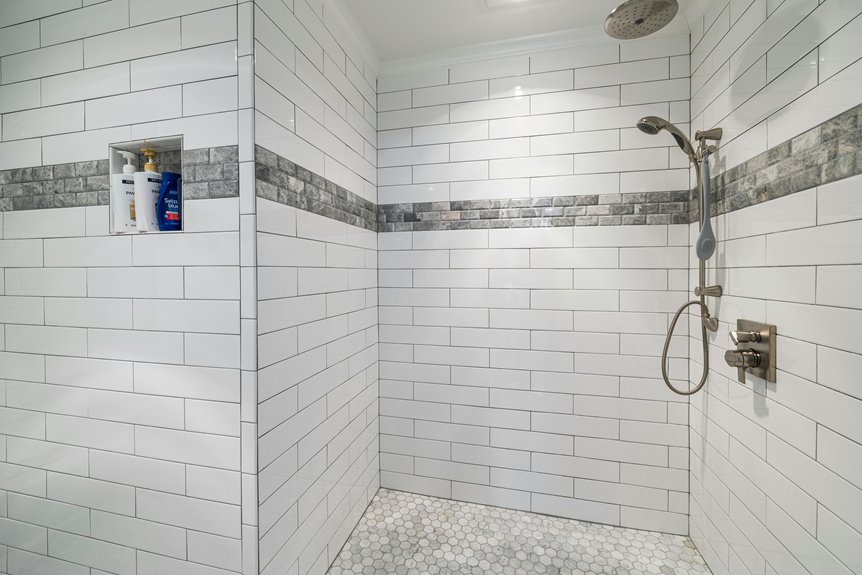
I’ll use Decorators silicone caulk to seal bathroom joints that acrylic simply can’t handle—it’s waterproof, flexible, and resists mold better than alternatives.
You’ll apply it along tub-wall seams, tile edges, and baseboards, then smooth it with your finger for a clean finish.
While you can’t paint it, the 24-48 hour cure time gives you a moisture barrier that lasts 5-10 years.
The specific techniques and timeline for getting this right are coming up next.
Why Silicone Caulk Beats Acrylic in Wet Bathrooms
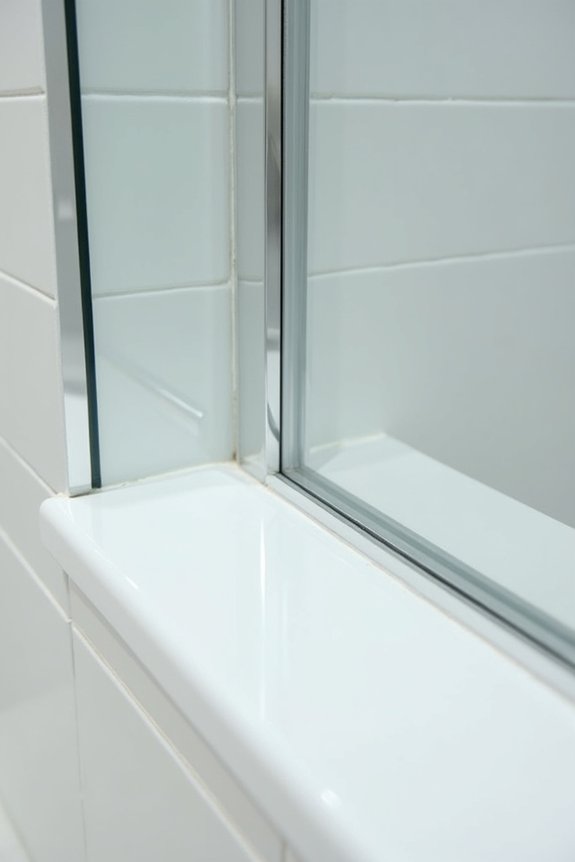
Ever wonder why your bathroom caulk starts peeling away like old wallpaper after just a couple of years?
I learned this the hard way. The culprit? Using the wrong bathroom sealant. That’s where silicone caulk comes in—it’s different from acrylic latex.
Here’s why I switched: silicone caulk stays flexible and waterproof in those perpetually damp shower areas where acrylic fails. It resists mold better too, which means fewer problems lurking in your caulk lines.
The real advantage? Silicone lasts considerably longer. I’m talking years longer between re-caulking jobs.
The trade-off is paintability—silicone won’t take paint. But that’s a small price for a sealant that actually performs. Choose 100% silicone rated for bath and shower use, and you’ll have a durable solution that outlasts acrylic.
5 Bathroom Seams That Need Caulking (and Why)
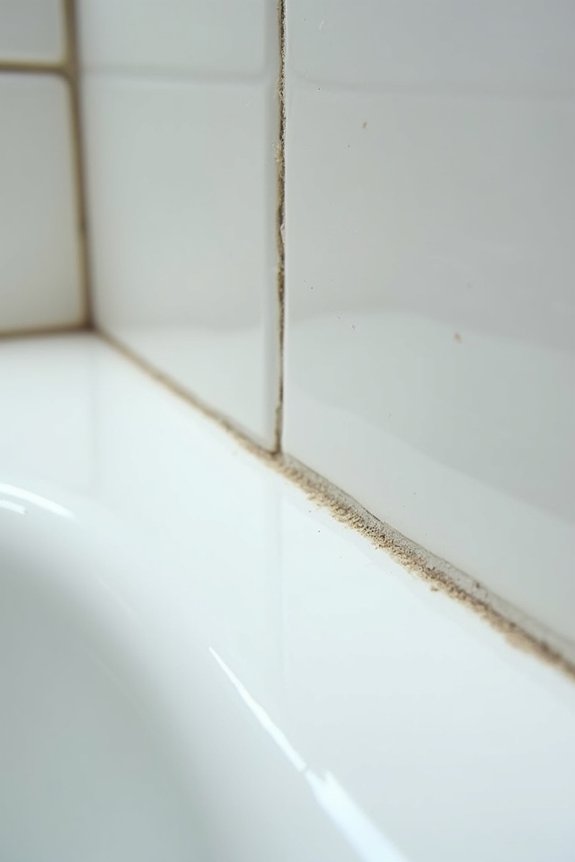
I’ve learned that you can’t just caulk anywhere in your bathroom and call it a day—there are five specific seams that actually matter, and they’re the ones that’ll cause real damage if you skip them. These critical spots are where water loves to sneak in and wreak havoc, so I’m going to walk you through exactly where they are and why each one deserves your attention. Once you understand these vulnerable points, you’ll see why proper sealing is the difference between a bathroom that stays dry and one that quietly rots from the inside out.
Critical Bathroom Sealing Points
When water finds its way behind your walls and tile, you have a serious problem—so let’s talk about where it actually matters. The tub-wall seam is ground zero for water intrusion. You’ll also want to caulk where tiles meet walls and around your tub spout, since water loves sneaking behind there. Don’t forget baseboards, toilet bases, and sink-to-counter joints—they’re moisture magnets. These critical bathroom sealing points aren’t glamorous, but they’re your defense against mold prevention and costly damage. Using bathroom-rated silicone caulk gives you flexibility and mold resistance. Investing time in these spots now saves you from becoming a reluctant bathroom renovation expert later.
Protection Against Water Damage
Water sneaks everywhere. Without proper sealing, moisture creeps behind tiles and walls, causing damage that’s expensive and invisible until it’s too late. That’s why I focus on silicone caulk—it’s your best defense.
| Problem | Solution | Result |
|---|---|---|
| Water intrusion | Silicone caulk | Prevents hidden damage |
| Mold growth | Bathroom mold resistance | Healthier space |
| Deteriorating grout | Waterproof sealant | Long-lasting seams |
| Peeling paint | Proper curing time | Professional finish |
Quality bathroom-specific sealants with mold-resistant properties protect your investment. I’ve learned that choosing the right product upfront saves headaches later. Your bathroom needs this protection, and you’ll have the peace of mind that comes with knowing you’ve done it right.
Prepare Your Bathroom Surfaces for Caulking
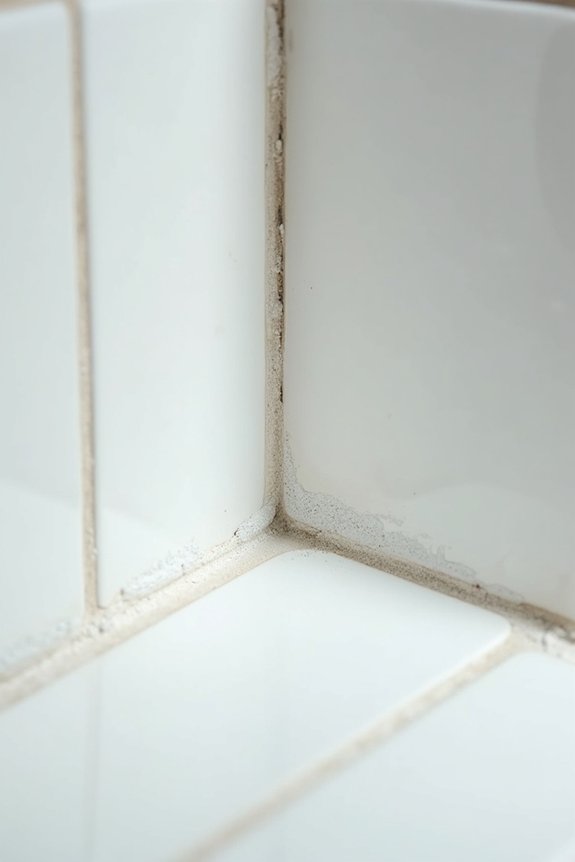
Why does old caulk always seem to fail right when you’ve finally decided to tackle a bathroom refresh? Let’s get honest—it happens to all of us. Before you apply new caulk, you’ll need to prep properly, and that means removing the old stuff completely. I’ve learned this the hard way. Grab a utility knife and scrape out every bit of deteriorated caulk. Next, clean your surfaces with a mildew-cleaner to tackle any stubborn growth, then treat moldy spots with bleach or hydrogen peroxide. Rinse thoroughly and let everything dry completely. Finally, wipe down with isopropyl alcohol to remove residues and sanitize. Mask surrounding edges with painter’s tape for crisp lines. This preparation work will improve your final results.
Scrape Out Every Bit of Old Caulk (Here’s How)
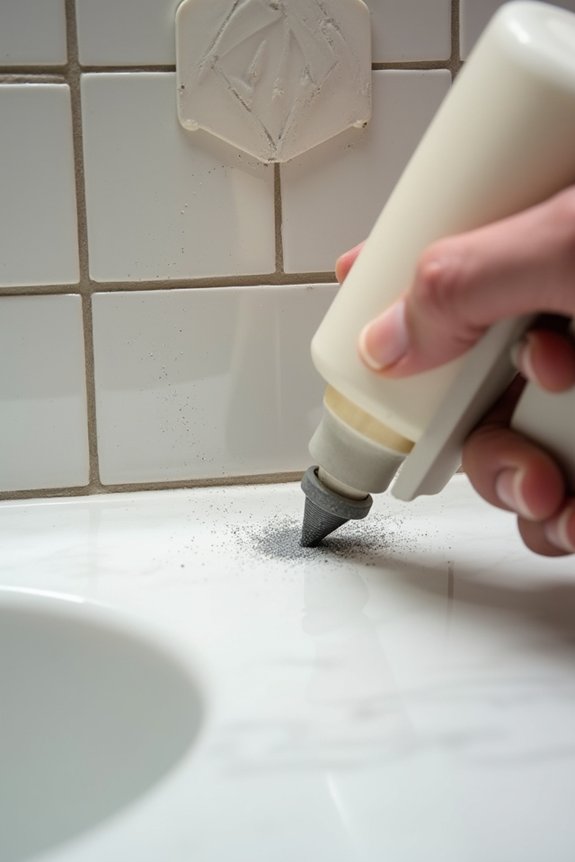
Removing old caulk is tedious, unglamorous work—but it’s absolutely necessary if you want your new caulk to stick around.
Removing old caulk is tedious, unglamorous work—but absolutely necessary for new caulk to stick around.
I grab my tools and get to work systematically. You’ll want:
- A utility knife to score and cut caulk in sections
- A dedicated caulk removal tool for lifting stubborn pieces
- A scraper for final cleanup down to the substrate
- Isopropyl alcohol for dissolving residue
I pay special attention to corners and tight joints where hidden gunk loves to hide. If you’re dealing with silicone-based caulk, remove it completely—no shortcuts. For acrylic latex, you might layer new caulk if the old stuff’s still solid.
After scraping, I clean with mildew prevention spray, then wipe everything with alcohol. Letting surfaces dry completely prevents mold prevention issues later. This boring prep work improves your bathroom sealing results significantly.
Apply Decorators Silicone Caulk for a Professional Finish
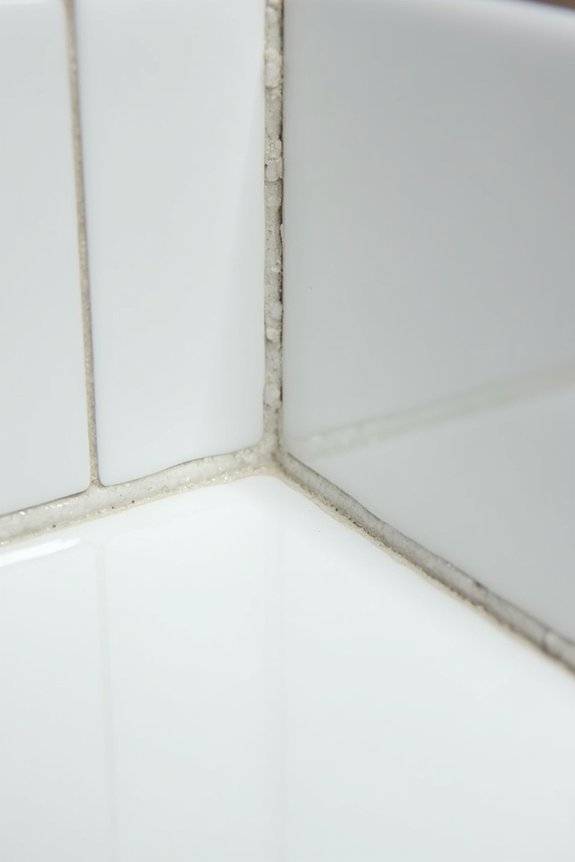
Now that you’ve cleared away the old caulk, it’s time to set yourself up for success—and this part is easier than scraping. I’ll walk you through prepping your surface, nailing the actual application, and then waiting while it cures. Let’s tackle each step so you can get that crisp, professional look without the frustration.
Preparation and Surface Cleaning
The key to getting decorators silicone caulk to stick around—literally—is starting with a clean slate. I learned this the hard way after my first bathroom project failed miserably. Here’s what I do now:
- Clean surfaces with a mildew-resistant cleaner to eliminate soap scum and buildup
- Wipe away all residues using isopropyl alcohol
- Let the area dry completely before touching anything
- Inspect joints for old caulk or debris that’ll sabotage your work
This preparation step separates amateur jobs from professional-looking results. When you skip cleaning, your caulk won’t adhere properly, and you’ll end up redoing everything. Taking thirty minutes upfront saves hours of frustration later. Your bathroom deserves this attention to detail.
Application Technique and Smoothing
Once your surfaces are prepped and dry, you’re ready for the part that actually makes your bathroom look finished. I’ll walk you through nailing your caulking technique.
Cut that nozzle at 45 degrees—it’s the standard approach for caulk gun mastery. Load your gun and extrude smooth, 3–5 foot sections. Don’t overthink it; just keep steady pressure. Immediately smooth each section with your finger or a caulk finishing tool for that professional concave seal.
| Step | Action | Tool | Result |
|---|---|---|---|
| 1 | Cut nozzle | Utility knife | 45° angle |
| 2 | Extrude bead | Caulk gun | Smooth lines |
| 3 | Smooth immediately | Finger/tool | Uniform finish |
| 4 | Remove tape | Hands | Crisp edges |
Painter’s tape guides crisp lines when applied on both sides. Pull it while caulk’s still workable.
Curing Time and Maintenance
How long should you actually wait before using your bathroom? I learned this lesson the hard way—patience matters with caulk curing. Your silicone caulk needs 24 to 48 hours for full moisture resistance, though an initial skin forms within 10 to 30 minutes.
Here’s what I do to protect my work:
- Avoid touching the bead during cure time
- Keep dust and debris away with proper ventilation
- Remove painter’s tape per manufacturer instructions
- Wait the full cure time before water exposure
I know it’s tempting to shower immediately, but rushing causes mold and seal failure. Light water exposure is safe after 1 to 4 hours, yet I always wait longer. Following the complete cure time maximizes chemical resistance and produces a professional-looking bathroom that will last.
Smooth and Finish Your Caulk Bead Like a Pro
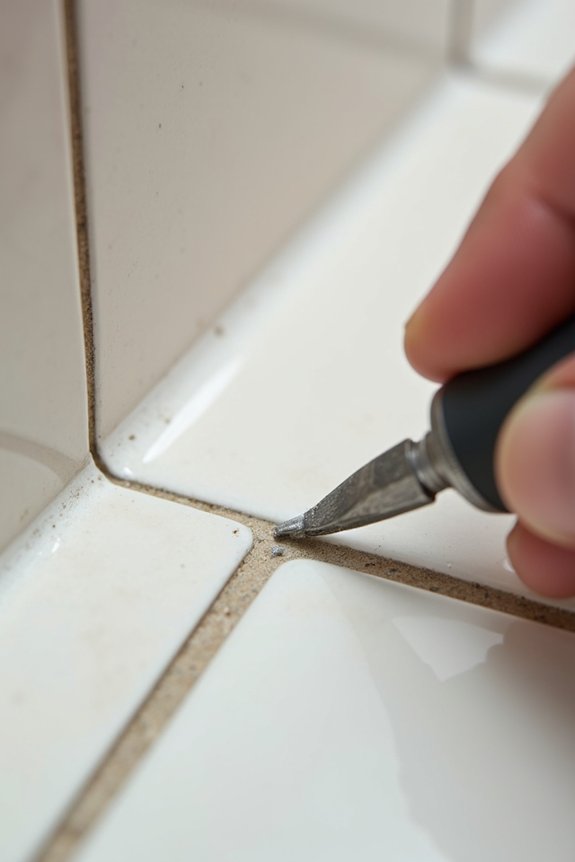
Getting that silky-smooth caulk finish is where amateurs and pros really part ways—and I’ll admit, it took me a few messy attempts before I figured it out. The key is timing and technique. You’ll want to smooth your caulk bead immediately after extrusion while it’s still workable. I use either my finger or a dedicated smoothing tool, applying gentle pressure for that uniform concave finish.
| Step | Action | Tool | Timing | Result |
|---|---|---|---|---|
| 1 | Extrude steadily | Caulk gun | Immediate | Even bead |
| 2 | Apply painter’s tape | Tape | Before caulking | Crisp lines |
| 3 | Smooth bead | Finger/tool | Within minutes | Concave finish |
| 4 | Remove tape | Hand | While workable | Clean edges |
| 5 | Let cure | Nothing | Per instructions | Sealed joint |
Pro tip: Painter’s tape significantly improves your results. Apply it on both sides, caulk between, then peel while fresh.
Curing Time and Protecting Your Fresh Caulk
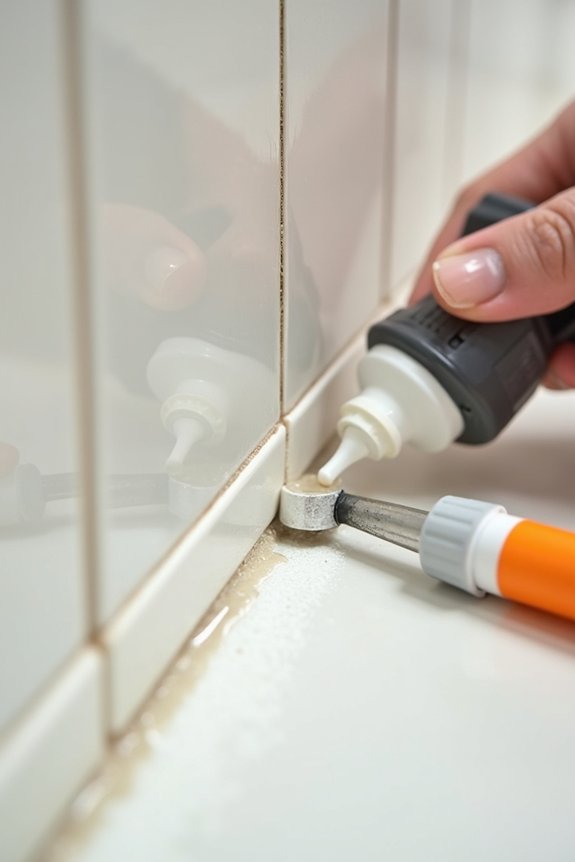
I’ve learned the hard way that patience is just as important as technique when it comes to caulk—rushing this step will undo all your careful work. Your caulk cure time typically spans 24–48 hours for full strength, though bathroom silicone forms a water barrier in about 30 minutes.
Patience is as crucial as technique with caulk—rushing this step undoes all your careful work and compromises results.
Here’s what I do to protect fresh caulk:
- Keep the area dust-free and undisturbed during curing
- Avoid moisture exposure until full cure completes
- Skip cleaning agents near fresh sealant
- Choose products with mold resistance for added protection
Moisture protection matters tremendously. Water hitting uncured caulk compromises adhesion and ruins your finish. I’ve learned to resist the urge to test it or expose it to humidity. Many quality sealants develop mold resistance as they cure, so you’re gaining benefits while waiting. The process works—your bathroom will be better for it.
When Should You Recaulk Your Bathroom Seals?
Since caulk isn’t a permanent fix—much as we’d like it to be—you’ll need to recaulk your bathroom seals every 5 to 10 years, depending on how much moisture and wear they endure. Catching problems early prevents larger issues down the line. Watch for cracking, gaps, peeling, or mold growth creeping behind your seal. Water seeping at joints, persistent mildew, and discolored or brittle caulk are your red flags.
When recaulking time arrives, invest in 100% silicone sealant for superior longevity and mold resistance. Here’s the important part: remove all old caulk before applying new. This prevents moisture from hiding underneath and allows proper adhesion. Skipping caulk removal creates bigger problems later. Thorough cleaning and drying beforehand are necessary steps.