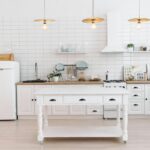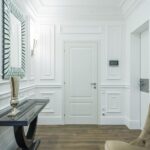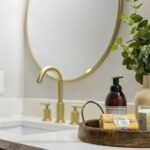
Modern decor is about removing what doesn’t earn its place. You’ll find clean lines, honest materials like wood and steel, and a neutral color foundation—think whites, grays, blacks. Every piece needs to do something meaningful; decoration takes a backseat to function. I keep surfaces clutter-free with hidden storage and let natural light shine through unobstructed windows. Bold accents pop strategically against calm backdrops. It’s restrained, purposeful, and liberating once you understand the core principles guiding each choice.
Modern vs. Contemporary: Where the Styles Diverge
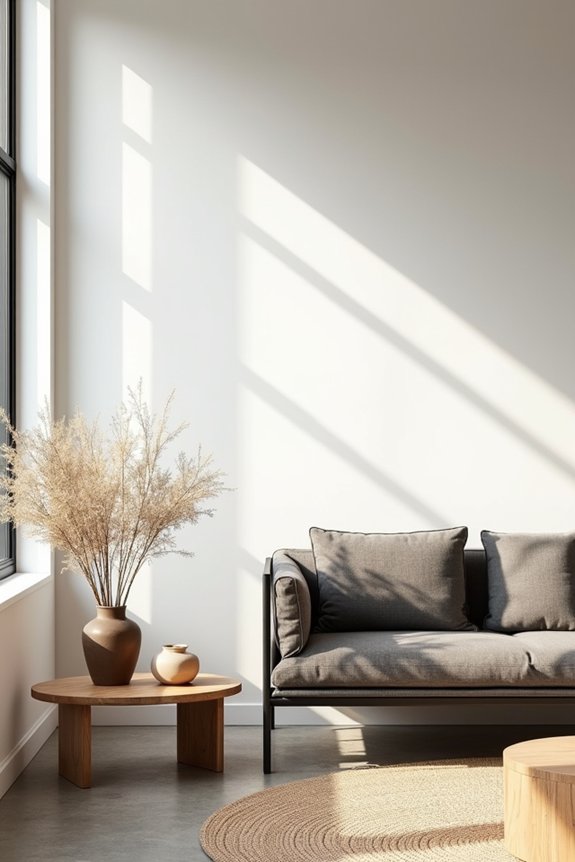
Ever walked into a room and wondered if you’re looking at “modern” or “contemporary” design? I used to confuse them constantly. Here’s the key difference: modern design comes from a specific time period—late 1800s through mid-1900s—with clean lines and minimal fuss. Contemporary design, though? It’s always evolving. It doesn’t stick to one era but borrows from many.
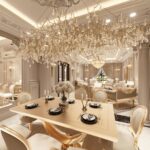
Think of modern as timeless restraint. Contemporary allows more personality and trend-driven choices. Modern spaces feature stark whites, glass, and steel. Contemporary blends varied colors and eclectic accents. Modern prioritizes function over decoration. Contemporary might embrace decorative curves and bold statements.
Both styles work well when thoughtfully arranged. The real trick is understanding what speaks to you. Are you drawn to timeless simplicity or evolving personalization? That answer determines your design direction.
The Aesthetic Foundation: Clean Lines and Minimal Clutter
What creates that clean, purposeful vibe:
- Clean lines everywhere—straight edges on furniture and architectural elements
- Neutral color palette as your foundation (think whites, grays, blacks, and natural wood tones)
- Minimal clutter through smart storage solutions that hide the mess
- Intentional negative space that lets your eye rest
This approach requires discipline. You’re fighting the urge to fill every corner. But when you embrace simplicity, your space has room to exist. Each piece earns its place, and you’re left with something functional and visually coherent.
Materials That Define Modern Design
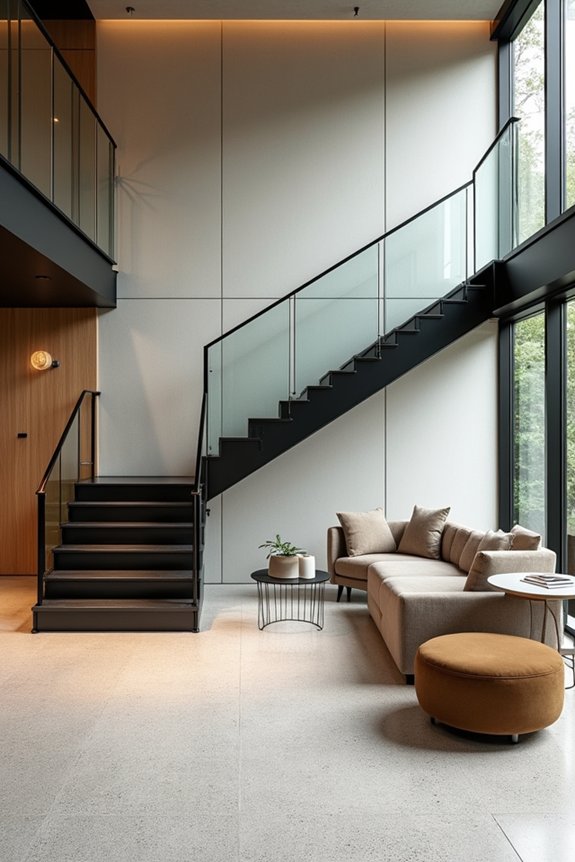
What separates truly modern spaces from just-another-minimalist room? It’s honest materials. Modern design celebrates what things actually are—no fake finishes, no pretense.
Modern design separates itself through honest materials—celebrating what things actually are, rejecting fake finishes and pretense.
Wood brings warmth through visible grain. Light species like oak and walnut feel inviting without clutter. Glass panels flood rooms with natural light and blur boundaries between inside and outside, making spaces feel bigger and more connected.
Steel beams aren’t hidden—they’re celebrated as design features. Exposed concrete floors reinforce that industrial honesty we’re after. Leather upholstery and natural fiber rugs add texture and tactile comfort.
Each material speaks for itself. You’re not fighting your space; you’re working alongside it.
Color and Light in Modern Interior Design
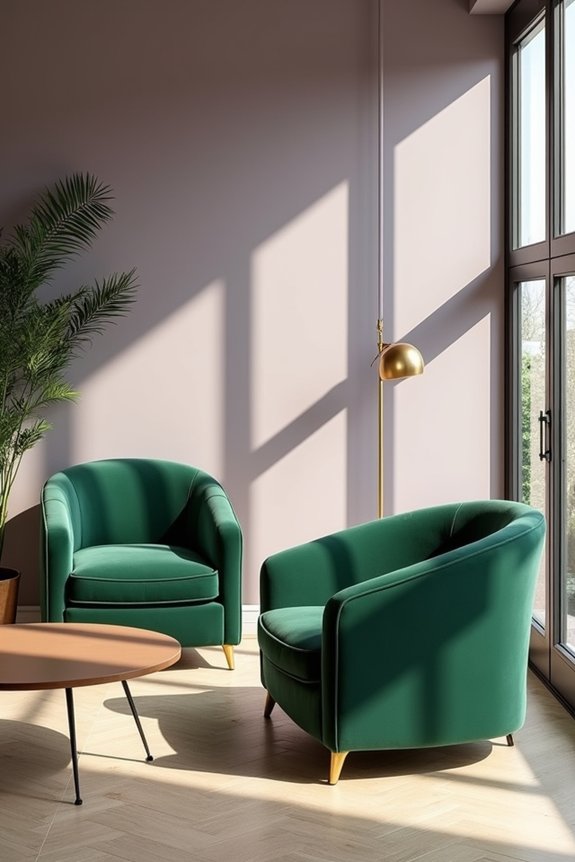
When I first started thinking about modern design, I realized that the color palette operates on restraint rather than abundance—you’re working with mostly neutrals like white, beige, and gray as your foundation, which honestly makes the whole process less overwhelming. What makes this approach actually interesting is how you use bold accent colors strategically; I’m talking a single artwork or one distinctive piece against those calm walls, not a rainbow explosion everywhere. Then there’s the light factor: you’ll want to maximize natural light through large windows with minimal coverings, and layer in clean fixtures for task and ambient lighting, so everything feels open and honest rather than cramped.
Neutral Palettes With Bold Accents
Picture a room that feels calm and collected, yet somehow still commands your attention—that’s what happens when you pair neutral foundations with strategic pops of color. Neutral palettes create breathing room in modern decor, while bold accents prevent spaces from feeling boring or sterile.
Here’s how to approach this balance:
- Choose white, gray, or black as your foundational backdrop
- Select one or two accent colors for artwork, furniture, or lighting
- Let dramatic contrast do the heavy lifting visually
- Use restraint—keep it minimal
When you’re building your modern space, think of neutrals as your canvas and bold accents as your signature brushstrokes. The key? Keeping your palette limited forces every colored element to earn its place. That’s what makes a room memorable rather than forgettable.
Natural Light and Windows
Why do so many modern spaces feel revitalizing while others feel cramped and dark? The answer lies in windows and natural light. I’ve discovered that large glass windows aren’t just pretty—they’re fundamental to modern design. They flood interiors with daylight, creating genuine openness that changes how spaces feel.
Here’s what I’ve learned: maximize those windows. Ditch heavy curtains and embrace minimal treatments so light flows freely. Pair this with light wooden tones and white walls that reflect and diffuse rays throughout rooms. The result? Your space automatically feels larger and calmer.
Strategic furniture placement matters too. I position pieces to maintain sightlines and prevent glare, keeping daylight as your design’s primary element. When you prioritize natural light, you’re investing in a home that feels alive.
Why Functionality Trumps Decoration
I’ve noticed that when I stop trying to make a space look pretty and start asking “what does this actually need to do?” everything clicks into place—form follows function isn’t just design jargon, it’s how spaces work well and look good at the same time. Every piece of furniture, every color choice, every light fixture should earn its spot by doing something useful, which means we’re naturally cutting out the decorative clutter that weighs down a room. Once you start thinking this way, you’ll find that purposeful design and authentic beauty aren’t opposites; they’re the same thing.
Form Follows Function
When you’re designing a modern space, every single piece of furniture and every design choice you make should actually *do something*. This is functional design at its core.
I’ve learned that form follows function means ditching decorative items that just sit there looking pretty. Instead, you’re choosing pieces that work hard for you:
- Built-in storage that hides clutter behind clean sight lines
- Multi-functional ottomans that store stuff and seat guests
- Expandable tables that grow with your needs
- Exposed natural materials that show honest construction
When I stopped buying decorative throw pillows I didn’t need, my space felt calmer. Every element now serves a purpose. That’s modern design—smart, practical, and genuinely beautiful because it actually works for how you live.
Purposeful Space Design
Will this piece actually improve how I live here? If the answer’s no, it doesn’t belong—no matter how it looks on social media.
Modern design demands we ask tough questions. Open floor plans and multifunctional furniture reshape how we move through our homes. I’ve learned that every item must earn its place by serving a genuine purpose.
| Design Choice | Purpose |
|---|---|
| Built-in shelving | Invisible storage |
| Sofa bed | Dual functionality |
| Large windows | Natural light + visibility |
Modern design strips away decoration that merely decorates. Instead, we choose pieces that work harder. A sleek console table with hidden drawers beats a decorative stand every time. Clean lines reduce visual noise, letting purposeful placement shine. When each element serves your actual lifestyle, your space becomes efficient and beautiful—not despite functionality, but because of it.
Eliminating Unnecessary Elements
Stripping a room down to what actually matters—that’s where modern design gets real. I’ve learned that minimalism isn’t about deprivation; it’s about intention. When you remove unnecessary elements, you’re not sacrificing comfort. You’re choosing what serves you.
Here’s what I prioritize:
- Neutral colors as your foundation—think whites, grays, and soft beiges that make spaces feel open
- Built-in storage that hides what you don’t display, keeping surfaces clutter-free
- Quality over quantity—fewer pieces that actually work hard for you
- Negative space treated as valuable real estate, not wasted area
Ditching decorative excess felt liberating. You stop maintaining stuff and start living. That’s the modern approach: a clutter-free environment where everything earns its place. When I removed the unnecessary, my space finally became what I wanted it to be.
Spatial Design: Open Layouts and Purposeful Planning
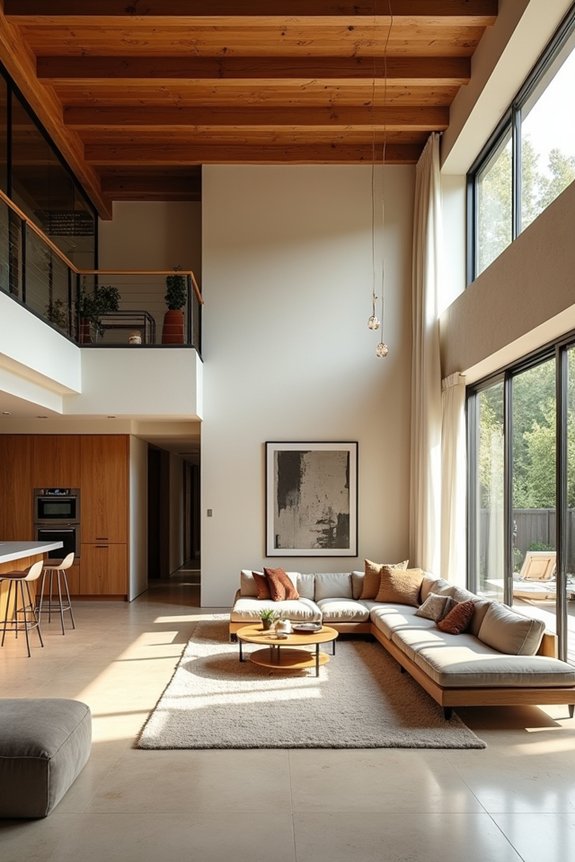
How do you make a space feel bigger without knocking down walls? You embrace open layouts and purposeful planning. I’ve learned that strategic furniture placement creates invisible zones without blocking sightlines. Think of area rugs as friendly boundaries—they define spaces while maintaining flow.
Strategic furniture placement and area rugs create invisible zones that expand visual space without blocking sightlines.
Built-in storage works well here. Instead of cramming everything into visible cabinets, I tuck away items where they belong. This keeps clutter-free sight lines that allow rooms to feel more open.
Large windows flooded with natural light amplify openness too. I skip heavy curtains and let sunshine do the work.
The key? Every piece serves a purpose. Nothing’s just sitting there looking pretty. When you arrange furniture strategically and eliminate unnecessary items, your space becomes more functional and visually spacious.
5 Practical Ways to Add Modern Elements to Your Space
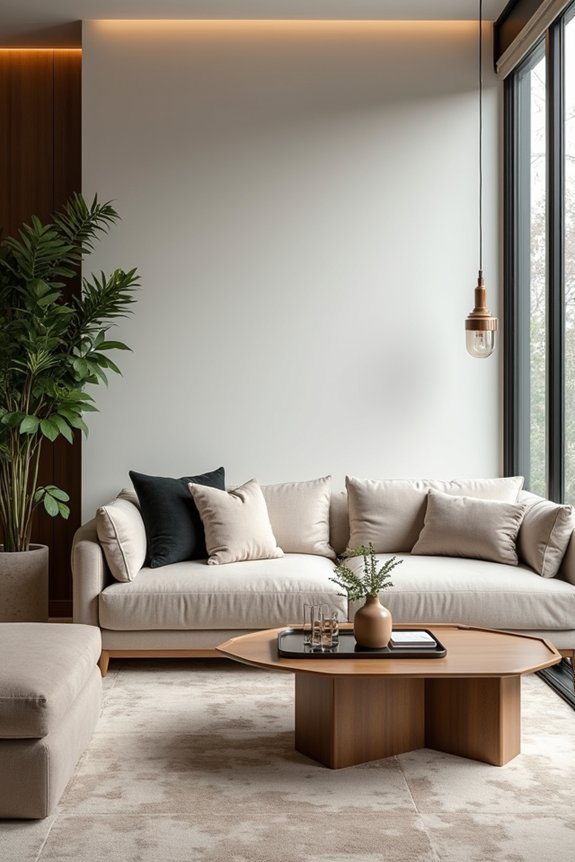
Start by focusing on these key elements:
- Swap out bulky furniture for low-profile pieces with clean lines in natural materials like unpainted wood and leather
- Maximize light by keeping windows unobstructed and surfaces clutter-free
- Hide your storage using built-in cabinets or invisible solutions that maintain minimalism
- Add industrial touches like exposed metal, glass shelving, or chrome fixtures
These changes don’t require a complete overhaul. I recommend tackling one room first, then expanding. You’ll notice how quickly your space becomes organized and well-designed once you prioritize function and simplicity over decoration.
Mistakes That Derail the Modern Look
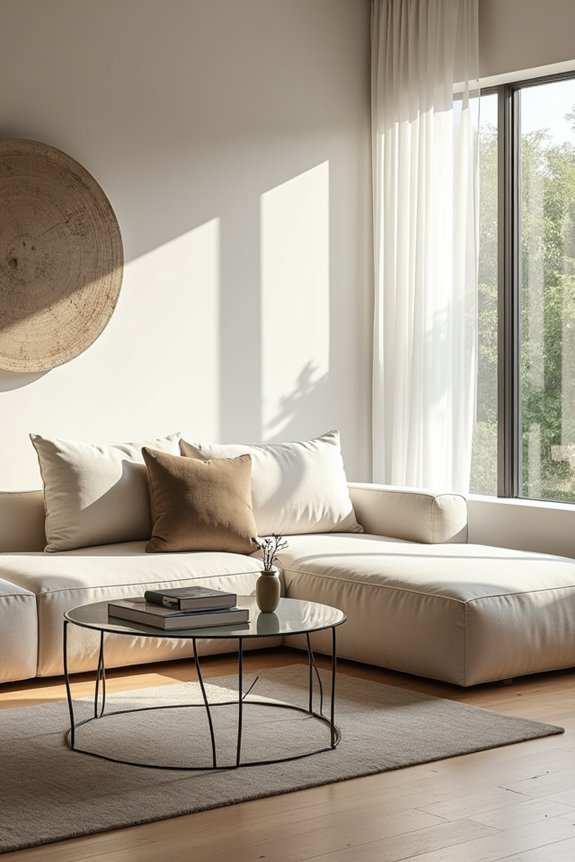
When you’re striving for that clean, modern aesthetic, it’s easy to sabotage yourself without realizing it. I’ve been there—cramming shelves with decorative pieces that looked great individually but clashed together. That’s mistake number one: too much stuff. Modern design demands minimal decor and open spaces that let your room breathe.
Next, watch your material choices. Mixing random wood tones with mismatched metals creates inconsistent finishes that feel chaotic rather than cohesive. Stick with a unified palette instead.
Heavy, curved traditional furniture? It’ll work against you. Modern spaces need low-profile pieces with straight lines and glass or steel surfaces.
Finally, don’t skip lighting. Cluttered fixtures and dim corners destroy your clean sight lines. Maximize natural light and choose purposeful, streamlined fixtures.